Decks Northern Beaches
Manly to Palm Beach
Manly to Palm Beach
We build timber and composite decking across the Northern Beaches: low decks off the living room, raised decks over sloping ground, and stairs down to the garden. Near the surf, we fix the boards with 316 stainless steel screws. On bushfire-prone land, we build the deck to the site's bushfire rating.
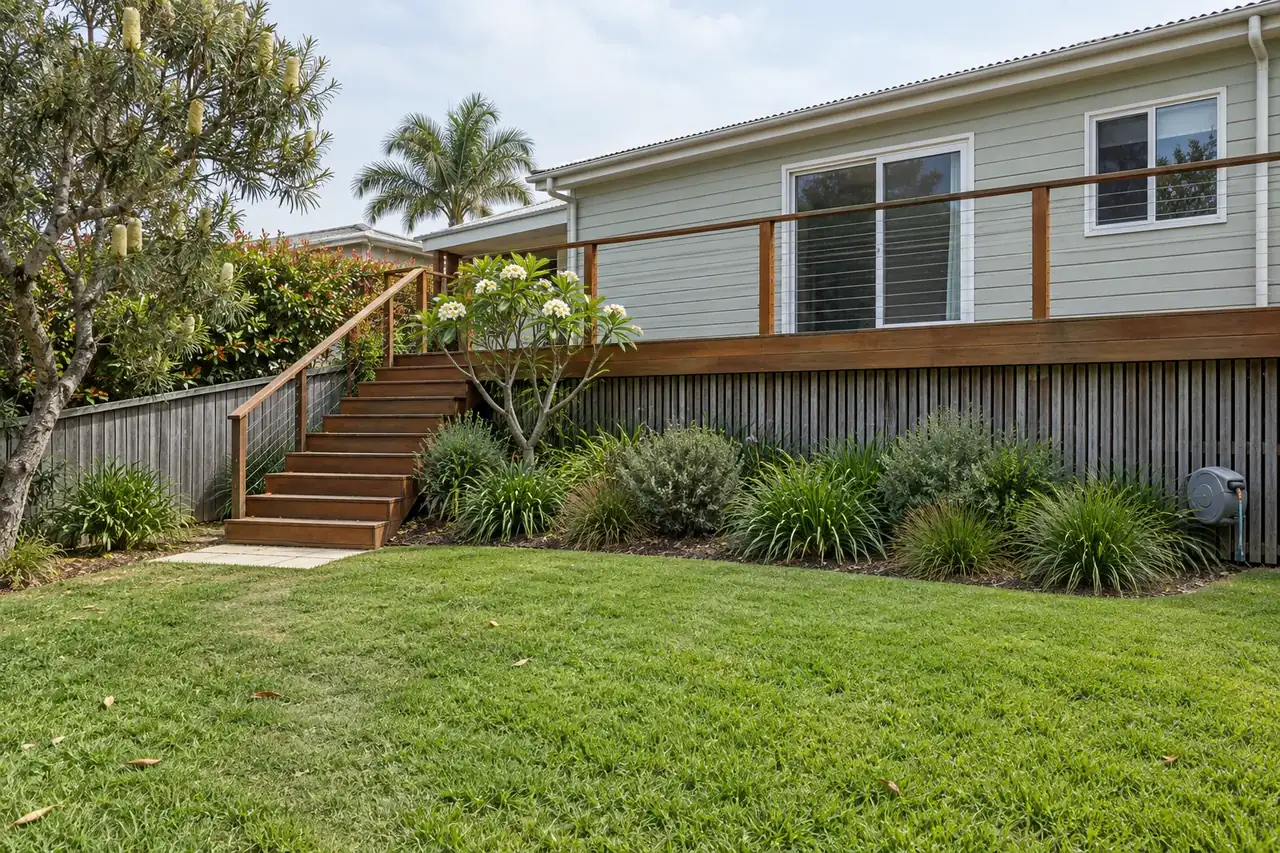
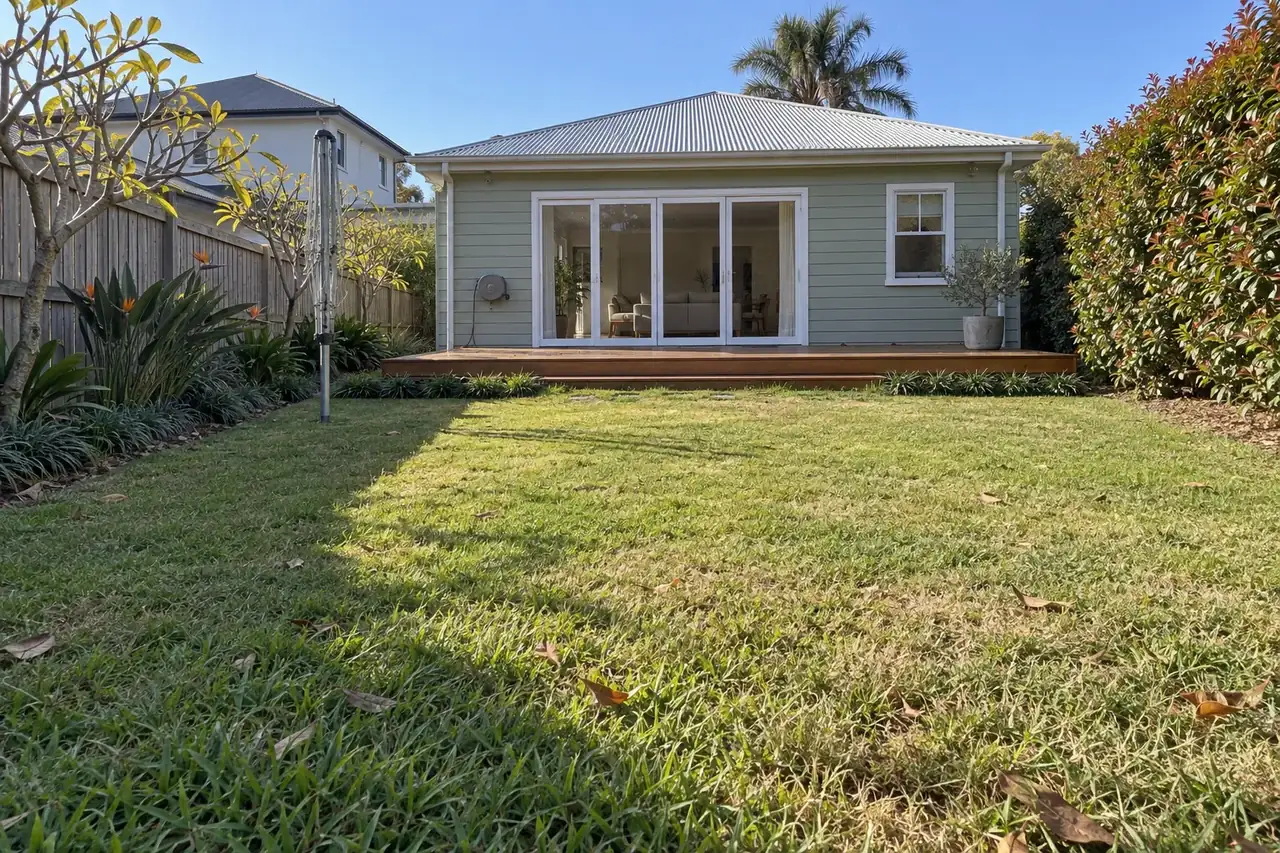
Request a free quoteLow decks off the living room, with a single step down to the lawn.
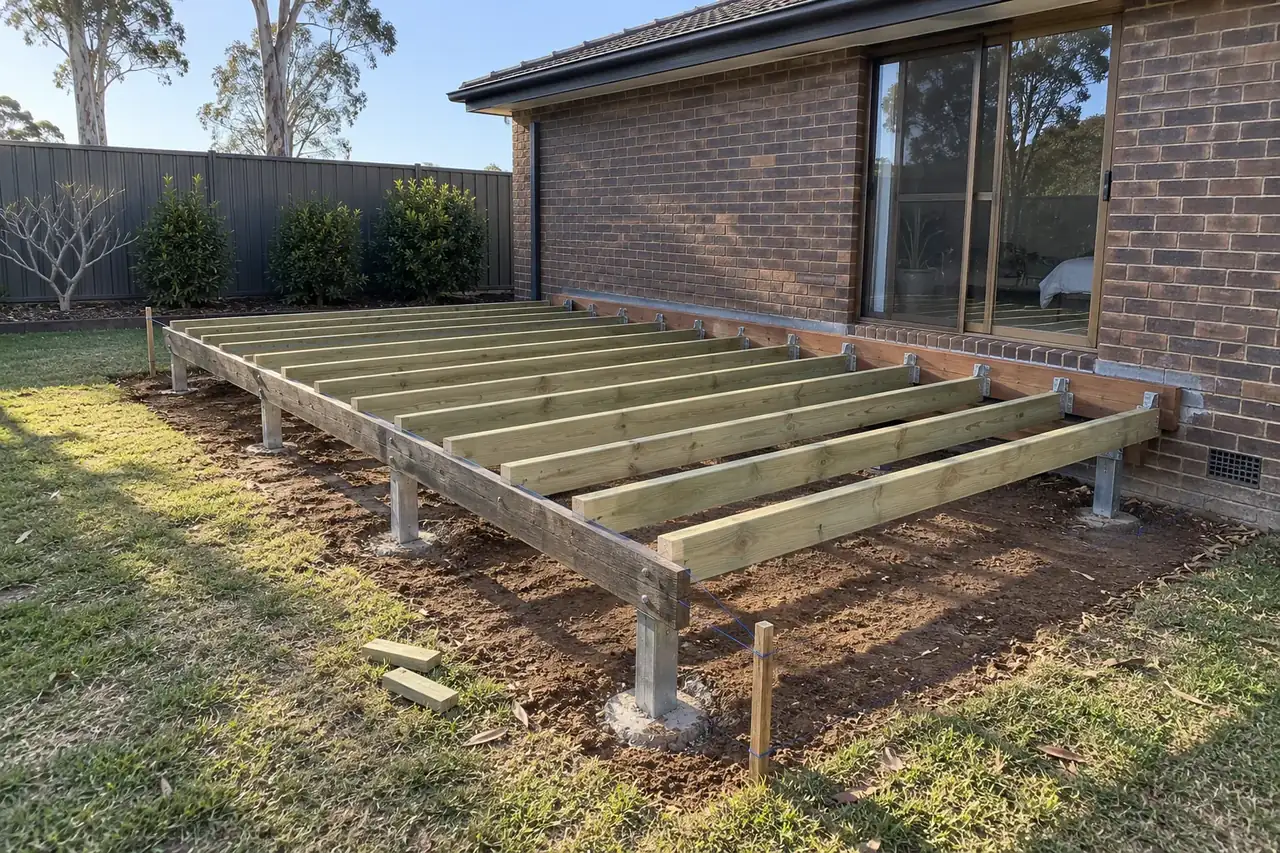
Decks on posts that create level space over a slope, with a balustrade and stairs.
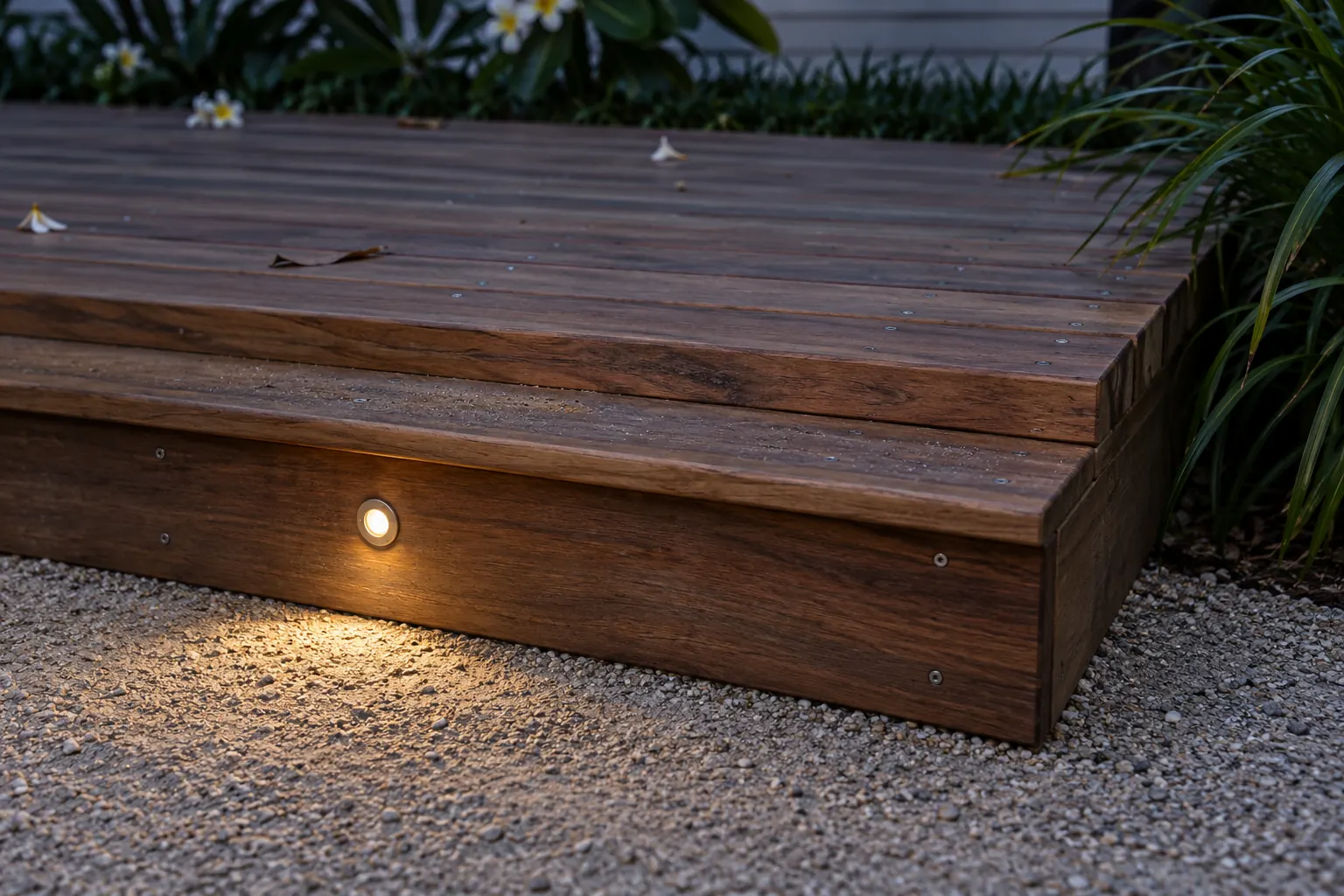
Wide deck stairs, step lights and edging that join the deck to the lawn and paving.
In NSW, a deck can be exempt from approval if it's up to 25 m², its floor is no more than 1 m above the ground, and it sits behind the front building line and at least 900 mm from the boundaries, among other conditions.
Much of the Northern Beaches is mapped bushfire-prone land. We build decks there to the site's bushfire attack level (BAL) under AS 3959, which decides the timber and the construction details.
Spotted gum and blackbutt are hardwoods often chosen for durability and bushfire performance. Composite boards need less upkeep but get hot in full sun.
Within about 1 km of a surf beach, or 50 m of Pittwater or the harbour, every screw, bolt and bracket should be 316 stainless steel. Galvanised screws rust and stain the boards there within a few years.
On bushfire-prone land, a deck within 5 m of the house has to be non-combustible to be exempt from approval. Otherwise it goes through approval and is built to the site's bushfire rating.
The landscaper measures the size, the height off the ground and the distance to boundaries, and checks the ground for footings and the salt and bushfire exposure.
Small low decks are often exempt (up to 25 m², floor no more than 1 m up, 900 mm from boundaries, behind the building line); anything bigger goes through a CDC or DA, and the timber grades and fixings are chosen.
After a Before You Dig check, the deck is set out with string lines and the footing holes are dug and concreted; where approval was needed, a certifier or engineer may inspect the footings.
Posts or stirrups go in, then bearers and joists, checked for level and spacing.
The boards go on with even gaps for drainage, fixed with screws matched to the salt exposure.
Fascia, stairs and any balustrade go on, the timber is oiled, and the site is cleaned up.
Often not, if it's up to 25 m², the floor is no more than 1 m above the ground, and it sits behind the front building line and at least 900 mm from the boundaries, among other conditions. Larger, higher or boundary-close decks need a development application or a complying development certificate.
Sydney guides put a low deck, built, at about $205 to $400 a square metre in treated pine and $345 to $800 in hardwood such as spotted gum or blackbutt (What's The Damage? and Yakka Labour, October 2026). Height off the slope, stairs, balustrades, stainless fixings near the sea and bushfire-rated materials change the price. Your price is set at the free site visit.
Timber looks and feels natural and can be sanded and re-oiled. Composite needs no oiling but can't be refinished and gets hot in the sun. Both last if they're fixed and ventilated properly.
Usually once or twice a year in full sun and salt air, less under cover. Oil keeps the colour and slows weathering.
Yes. We build raised decks on posts to create level space on steep blocks where a wall would be too tall. We size the posts and footings for the height and the ground.
316 stainless steel, along with every bolt and bracket, on blocks within about 1 km of the surf or 50 m of Pittwater or the harbour. Galvanised screws rust and stain the boards there. Screws and brackets in one joint should be the same metal, so neither corrodes faster.
Usually the frame. Joists spanning too far, sagging bearers, or posts and stirrups rotting or rusting at the ground make a deck flex. Extra bearers and posts fix most cases. A raised deck that sways sideways needs bracing, and checking soon, before it gets worse.
Grey is sunlight breaking down the surface of the timber, which happens fastest in full sun and salt air. Green is algae or mould in shade, where boards stay damp. A clean and re-oil restores the colour, and better airflow under the deck slows the green.
Often, yes, on low joists or adjustable pedestals, if the slab is sound and slopes enough to drain. Gaps between the boards and around the edges let water out and air through. The finished deck has to stay below the door sill.
Seven hardwoods count as bushfire-resisting: blackbutt, merbau, red ironbark, river red gum, silvertop ash, spotted gum and turpentine. The site's bushfire attack level (BAL) decides whether they are enough. At the highest levels, the decking must be non-combustible.
If the frame is sound, the boards and fixings can be replaced on it. We check bearers, joists and posts for rot, especially where boards trap water and at the post stirrups, and near the beach for rusted bolts. A rotten or rusted frame means a rebuild.
Send a short description of the job, your suburb and a photo if you have one. We’ll reply to arrange a site visit and a free quote. You can also email quotes@northernbeacheslandscaping.com.au.
Thanks, we have your details
We’ll be in touch to arrange a site visit and a free quote. If it’s urgent, email quotes@northernbeacheslandscaping.com.au.