Drainage Northern Beaches
Manly to Palm Beach
Manly to Palm Beach
We fix garden drainage on the Northern Beaches by finding where the water comes from and where it can legally go. Common causes are a slope sending water towards the house, walls with no drainage behind them and paving laid without a fall. We install ag drains, strip drains, dry creek beds and pits to carry it away.
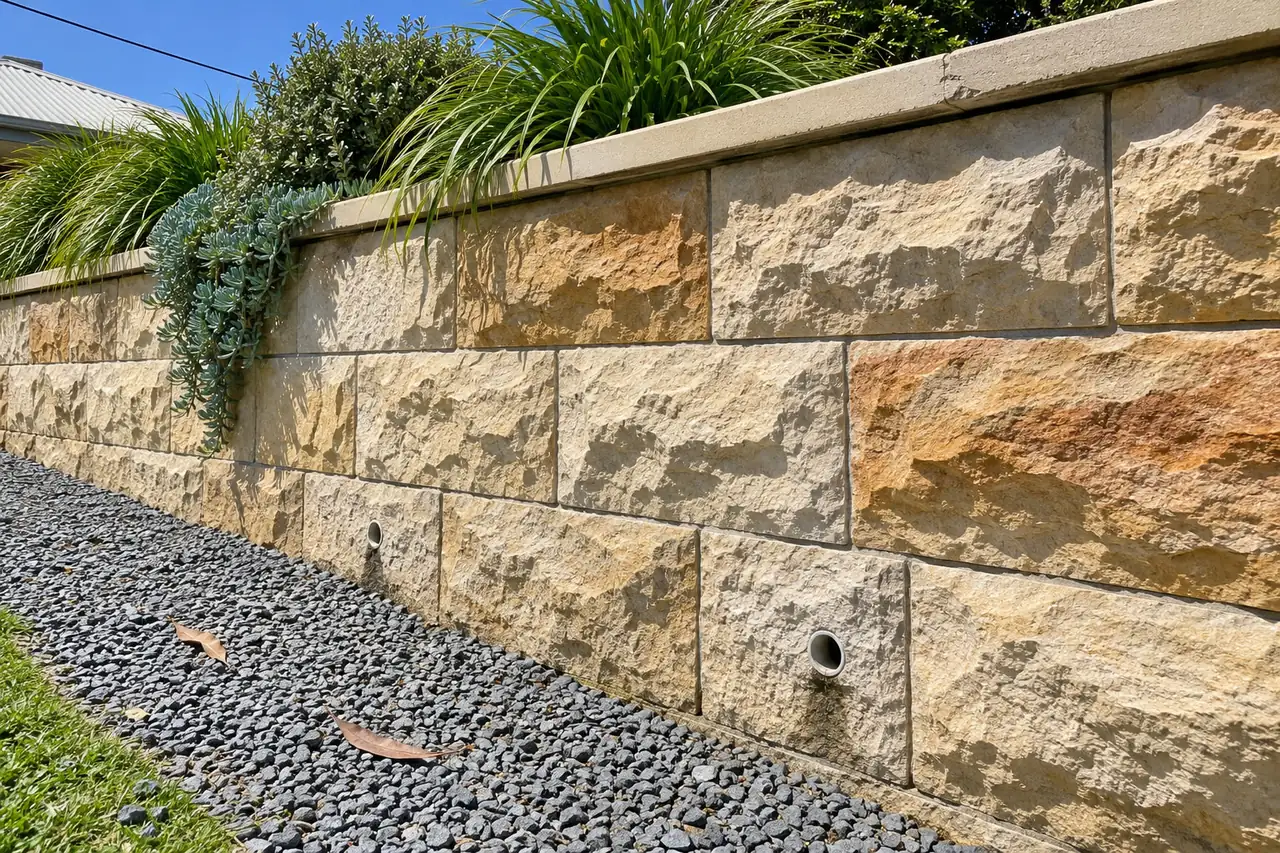
Request a free quoteSlotted pipe in a filter sock, bedded in blue metal gravel, behind retaining walls and under wet lawns.
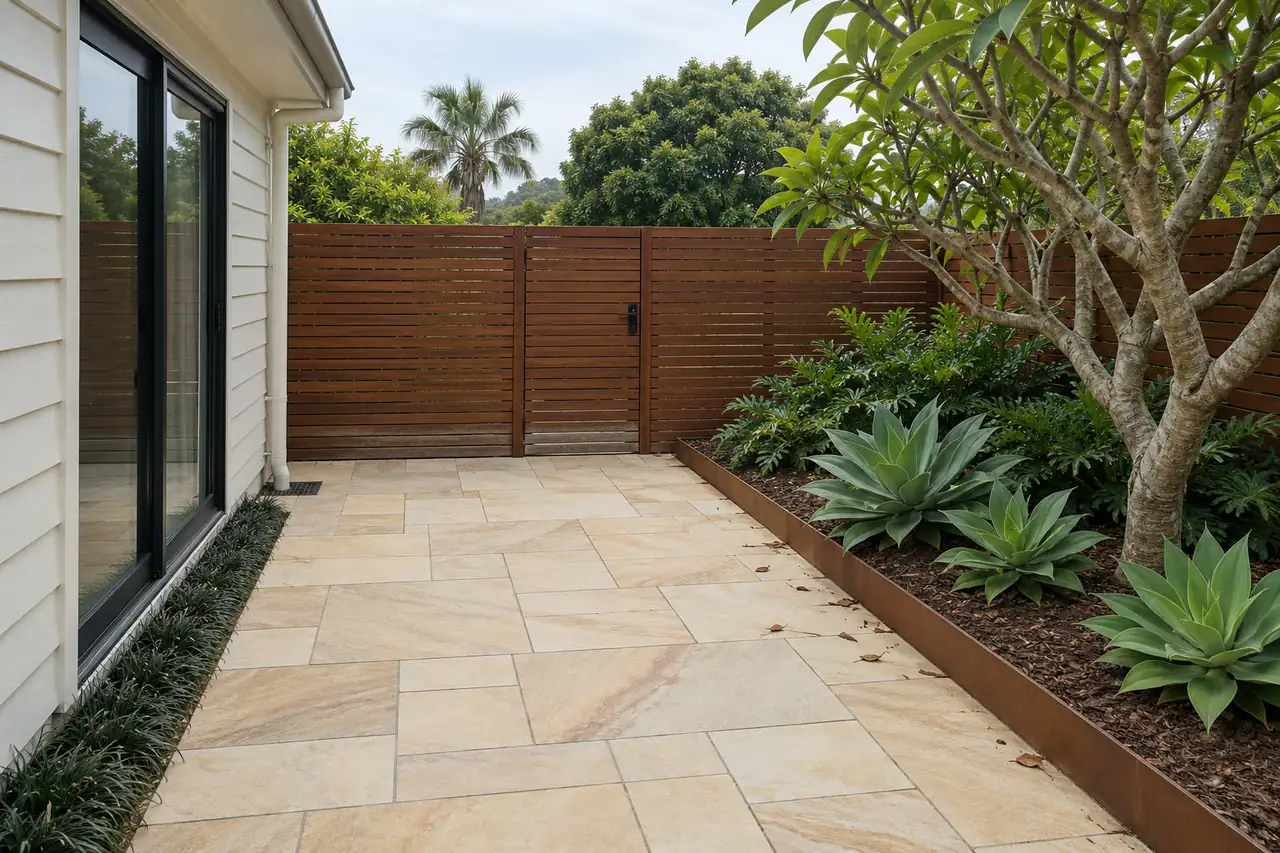
Grated drains along paving and doorways, and pits at low points, catching surface water before it reaches the house.
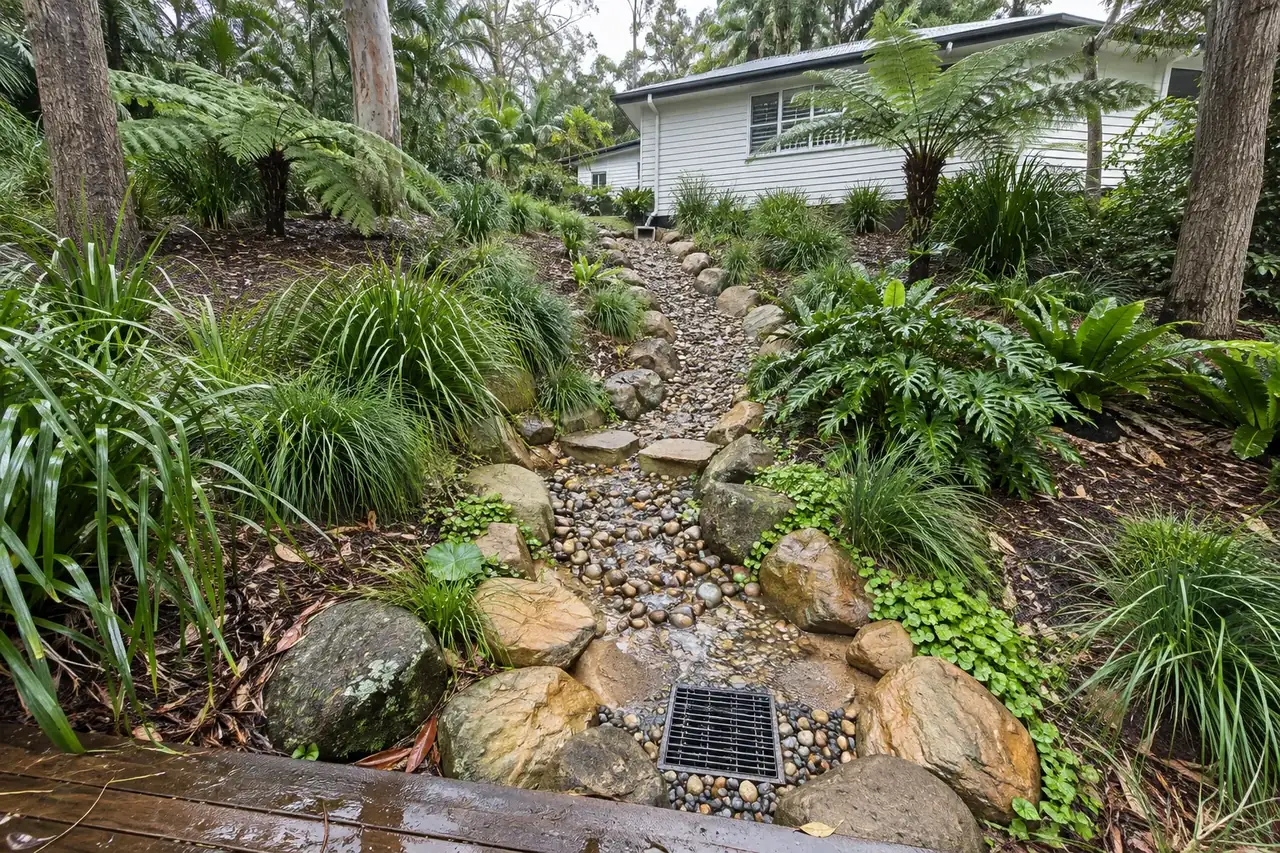
A shallow channel of pebbles and boulders that carries stormwater down a slope and looks like part of the garden.
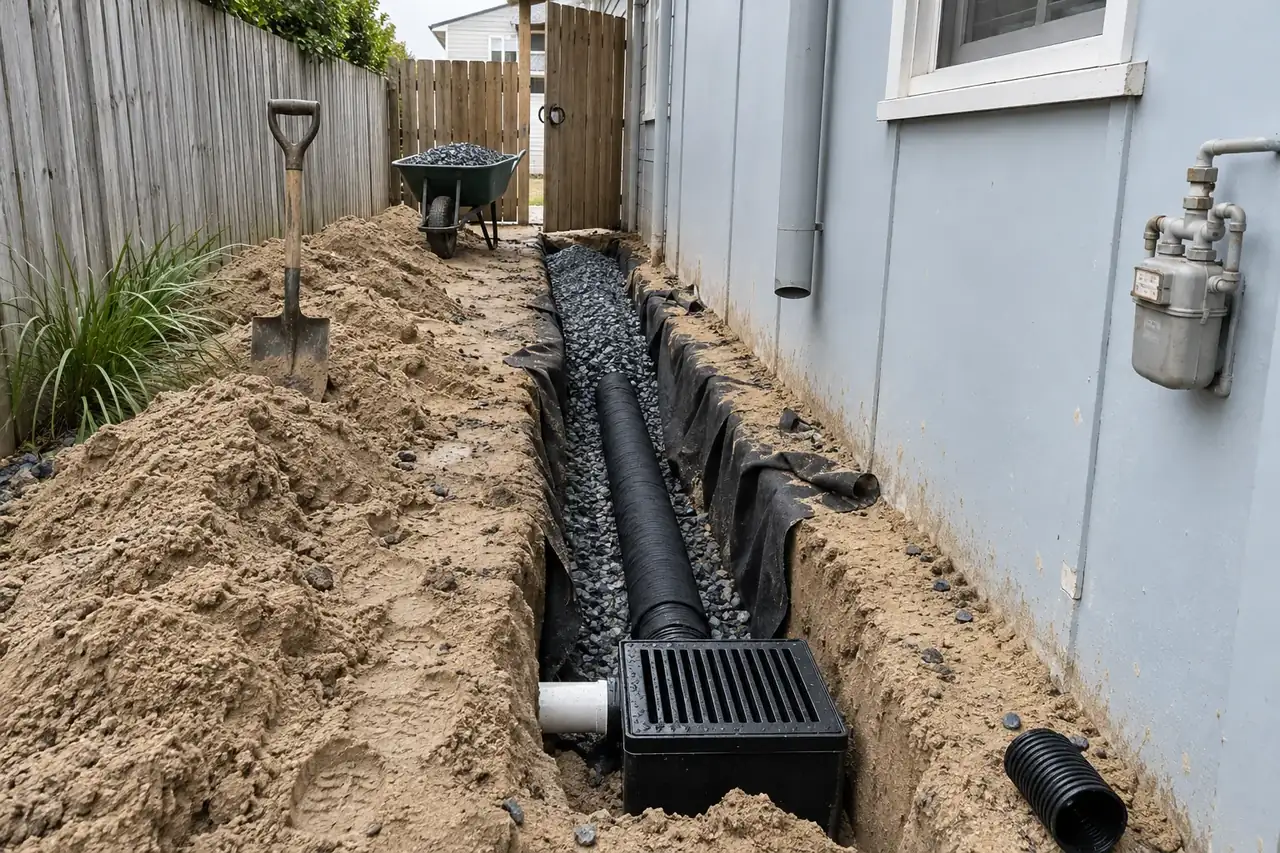
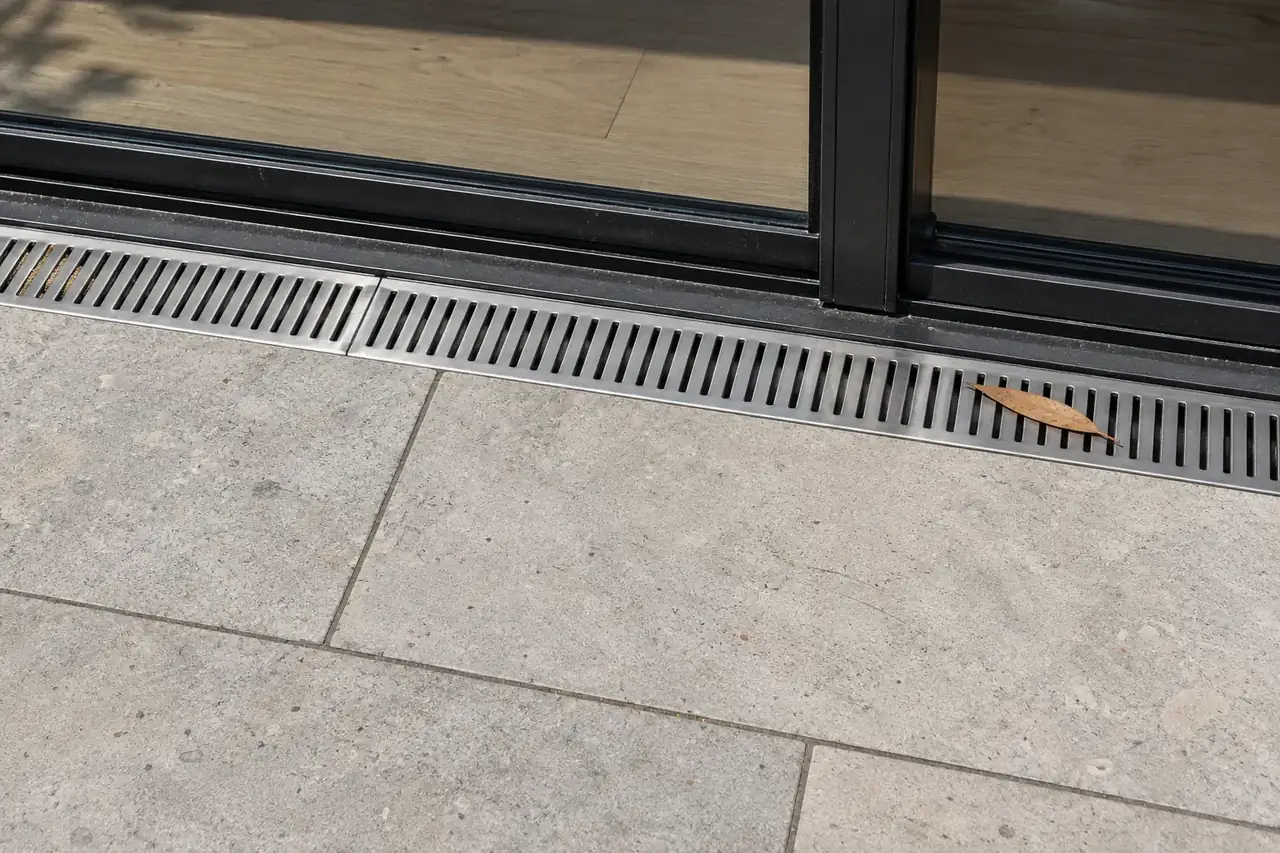
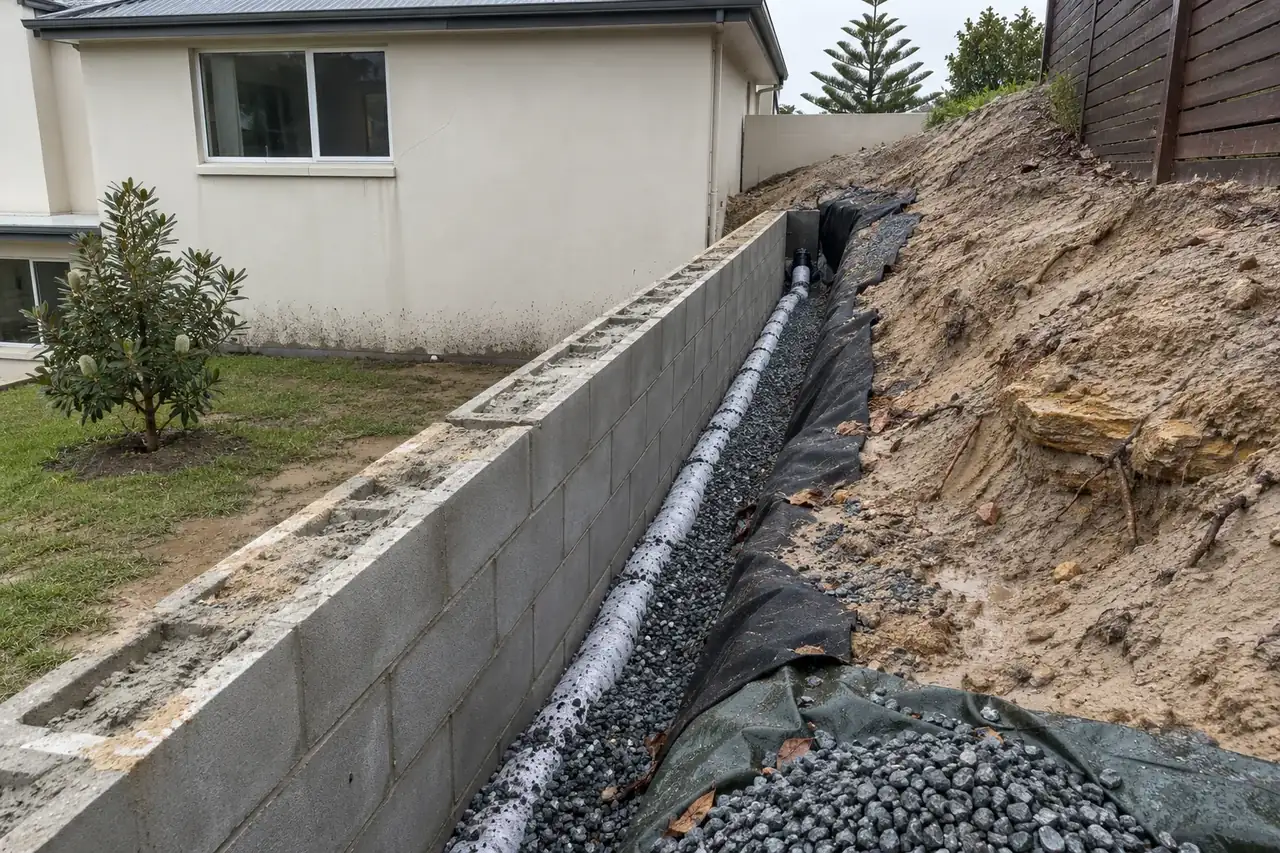
Stormwater has to go somewhere council allows, such as the kerb, a stormwater easement or an approved absorption system. It can't be sent onto a neighbour's land.
On the sandy coastal strip, water soaks away fast and absorption trenches can work where council's rules allow, which is rarely right beside the lagoons. On clay and rock further up the plateau, water sits and needs piping away.
Paving and lawns should slope away from the house, so water runs off rather than pooling against walls and doors.
In NSW, connecting to the stormwater system is work for a licensed plumber or drainer. Ag drains, strip drains and creek beds in the garden are landscaping work.
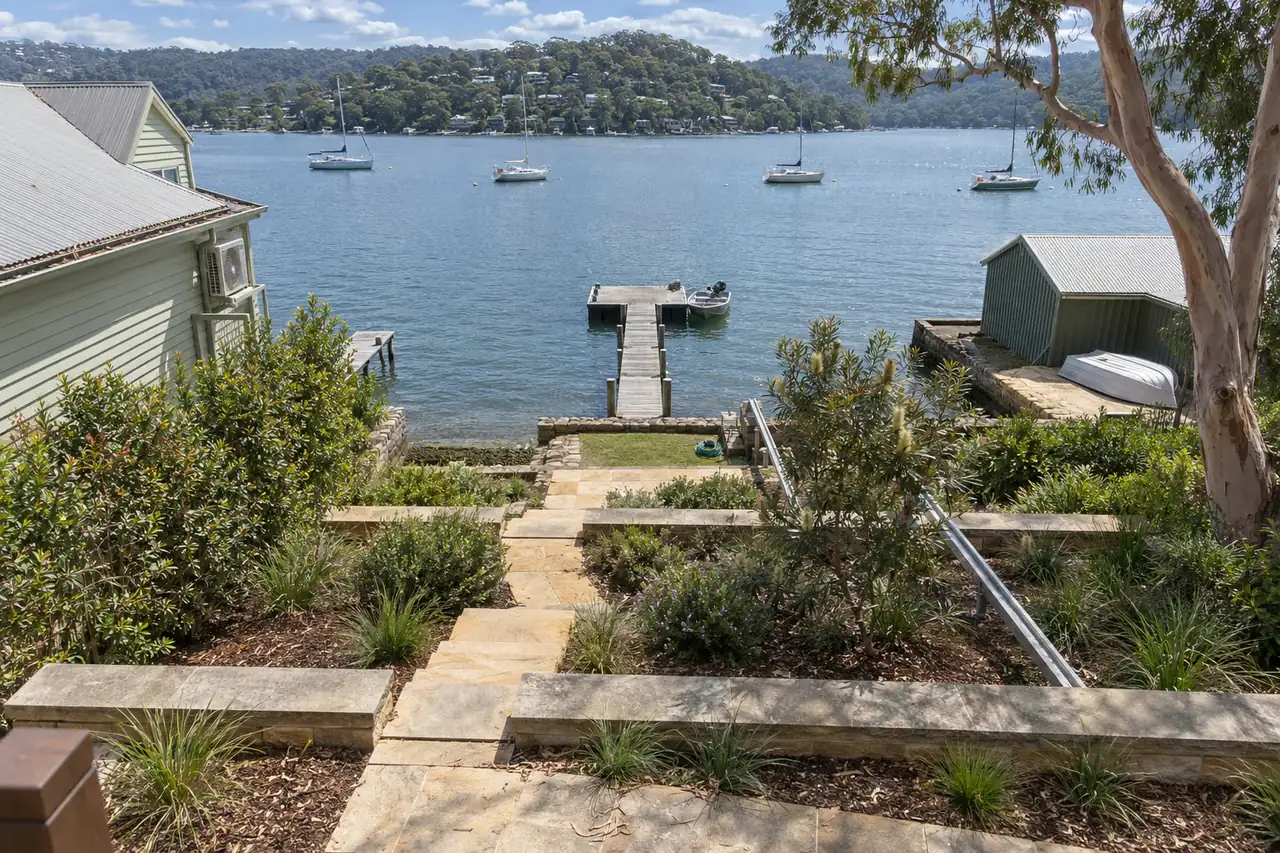
Many Pittwater and harbour-side blocks slope away from the road, so water can't run to the kerb. Council then looks for a pipe or easement through the downhill neighbours first, then other options.
Garden drainage can't stop lagoon flooding. Around Manly and Narrabeen lagoons, overland flow paths are kept open, with no solid walls or fences across them.
The landscaper looks at where the water comes from and where it sits, checks levels, soil and downpipes, and finds where the water is allowed to go.
It might be a subsoil ag drain, a surface channel drain, pits and pipes, or regrading the ground, with the run set to fall to the outlet.
After a Before You Dig check, the trench is dug at a steady fall, and paving or turf in the way is lifted.
Slotted ag pipe goes in filter fabric and gravel, or a channel drain and pits go in, and a licensed drainer makes any connection to stormwater.
Water is run through to check the flow, the trench is backfilled, and turf or paving goes back.
Usually the slope above sends surface water and groundwater towards the house. An ag drain along the house, or a cut-off drain across the slope above it, catches the water and carries it to a pit.
NSW guides put a subsoil drain, slotted ag pipe in gravel, at about $50 to $150 a metre, a surface channel drain at $100 to $300 a metre, and a small pit-and-pipe stormwater system at $1,500 to $6,000 (The Quote Yard, June 2026). Length, depth, rock, digging under paving and the licensed stormwater connection change the price. Your price is set at the free site visit.
Usually the ground falls the wrong way, the soil under the lawn is compacted, or water from the slope above has nowhere to go. Fixes range from regrading and an ag drain to new pits.
Yes. Gravel backfill, an ag pipe and weep holes stop water building up behind the wall. Without them, water pressure builds up behind the wall after rain.
A licensed plumber or drainer, because stormwater pipes are regulated drainage work in NSW. We can work alongside a plumber where a job needs both.
Often. Ag drains run in narrow trenches, and strip drains can go along the edge of existing paving. We plan the route around plants and paths.
Usually the ground or paving falls towards the house, or a downpipe empties beside it. Regrading so the ground falls away, a strip drain at doorways and connecting the downpipe fix most cases. Garden beds should sit below the weep holes, not banked against the wall.
Natural runoff coming downhill generally has to be accepted. A neighbour shouldn't concentrate or redirect it onto your land with a pipe, new paving or changed levels. Talk to them first; councils step in where a structure directs the water and causes damage.
Usually, yes. Roof water should reach a legal point of discharge, such as the kerb, a council pipe or a drainage easement. A downpipe spilling onto the ground beside the house wets the subfloor and footings. Connecting downpipes is licensed plumbing work.
Sometimes, on deep sand well above the water table. For new roof or paving water, council's policy needs an engineer's design from a soil test, the trench 3 m from boundaries and buildings, and its base 500 mm above the water table. Beside the lagoons, that often rules it out.
It's common on cut sandstone. Groundwater runs along the rock layers and comes out where the slope was cut for the house. It can't be stopped, so it is caught: a spoon drain or ag drain along the rock's base, falling to a pit.
Mostly, yes. Both are a gravel trench with a slotted pipe that collects groundwater and carries it away. In Australia it's usually called an ag drain or ag line. The pipe sits in a filter sock and needs a fall to a pit or another outlet.
Send a short description of the job, your suburb and a photo if you have one. We’ll reply to arrange a site visit and a free quote. You can also email quotes@northernbeacheslandscaping.com.au.
Thanks, we have your details
We’ll be in touch to arrange a site visit and a free quote. If it’s urgent, email quotes@northernbeacheslandscaping.com.au.