Garden steps Northern Beaches
Manly to Palm Beach
Manly to Palm Beach
We build garden steps on steep Northern Beaches blocks by setting out the whole flight first, so every step is the same height. They go in as sandstone steps, timber or concrete sleepers, or stepping stones on a firm base. We follow the route you walk, add landings on long runs and deal with the water coming down the slope.
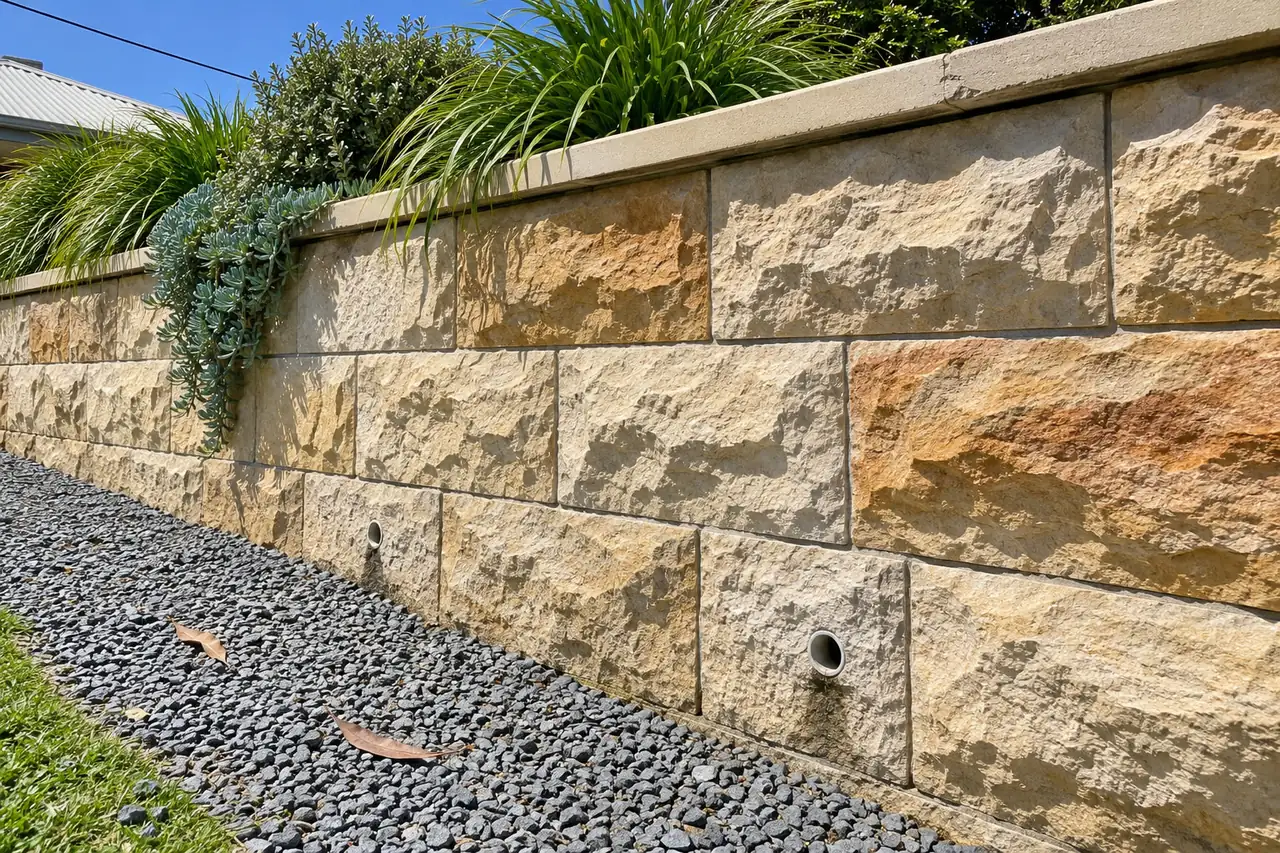
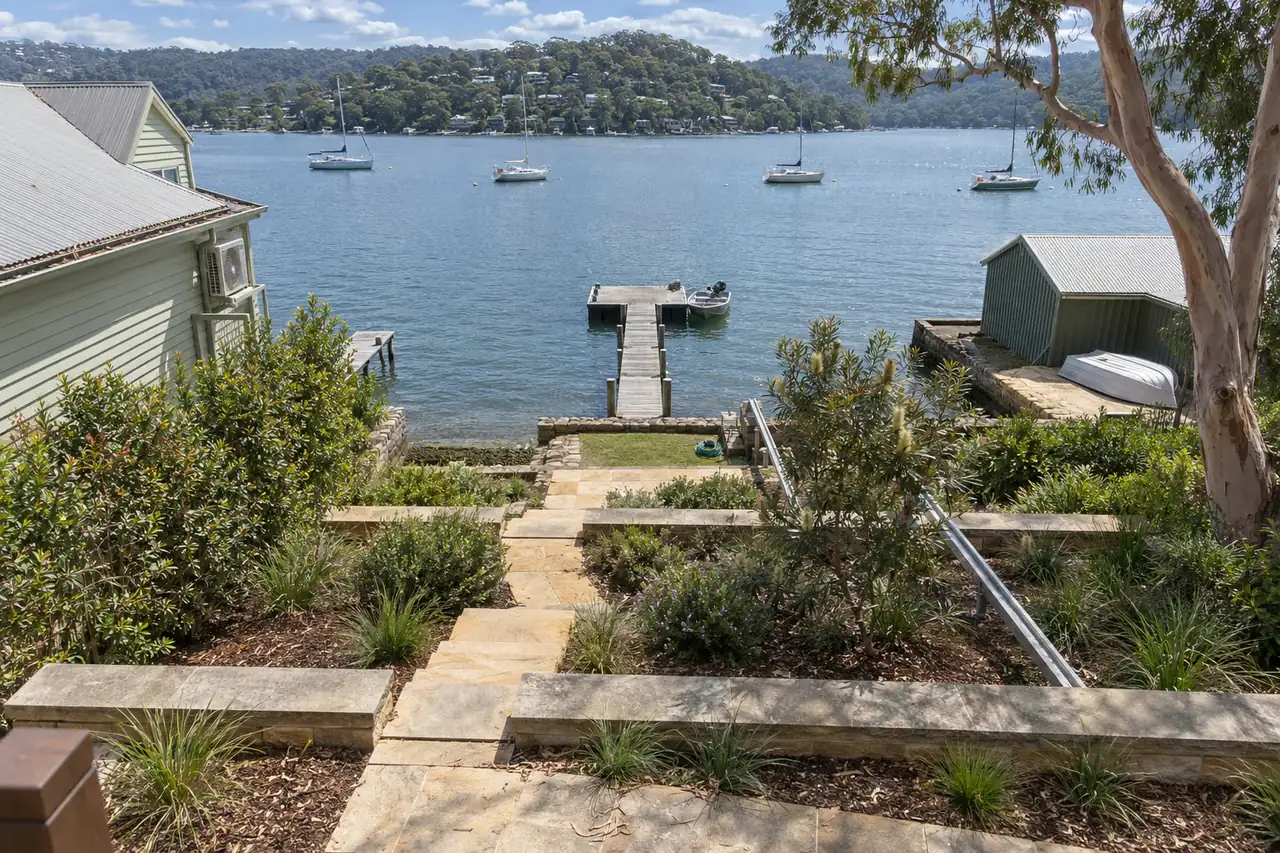
Request a free quoteSawn or split sandstone treads, often built straight onto the rock already in the slope.
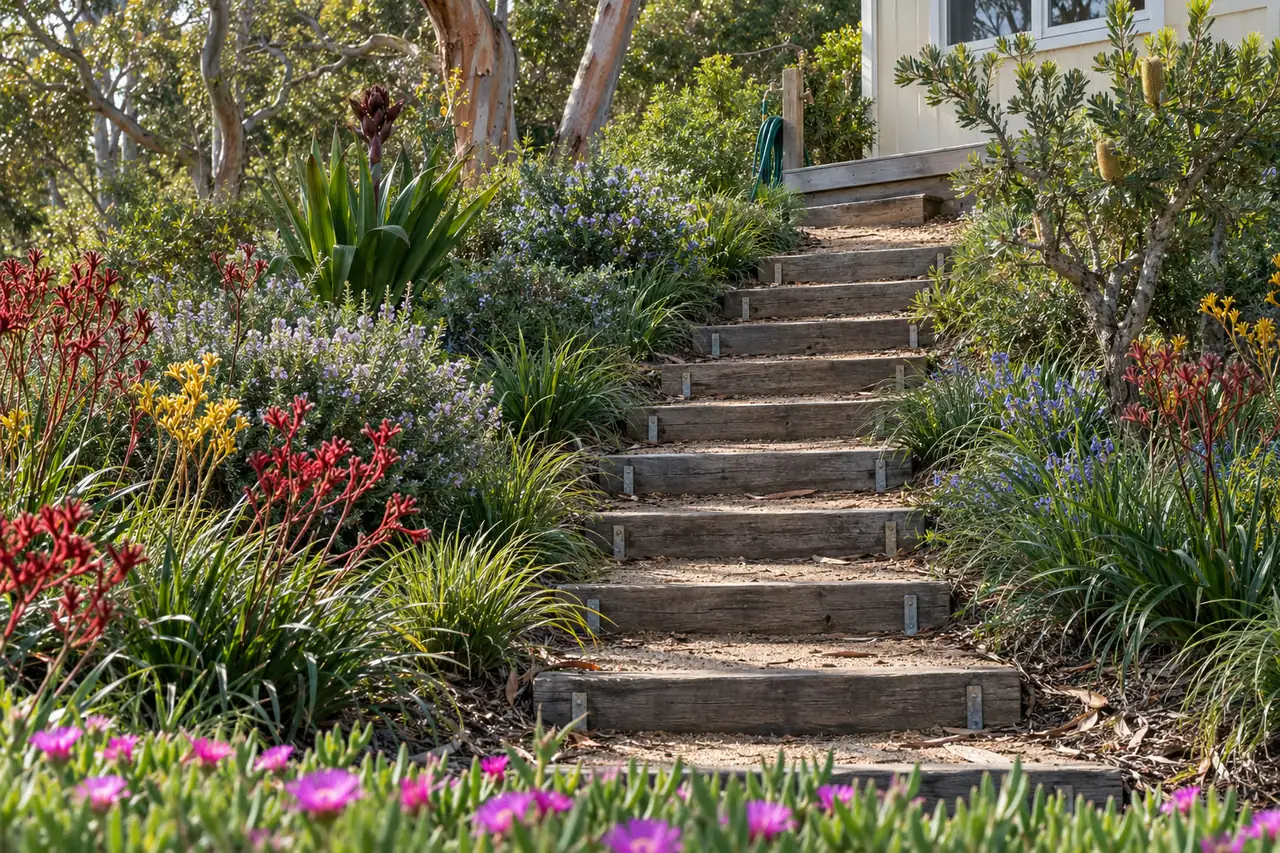
Timber or concrete sleepers held by steel pins, filled with gravel or crushed sandstone. Quick to build on bush blocks.
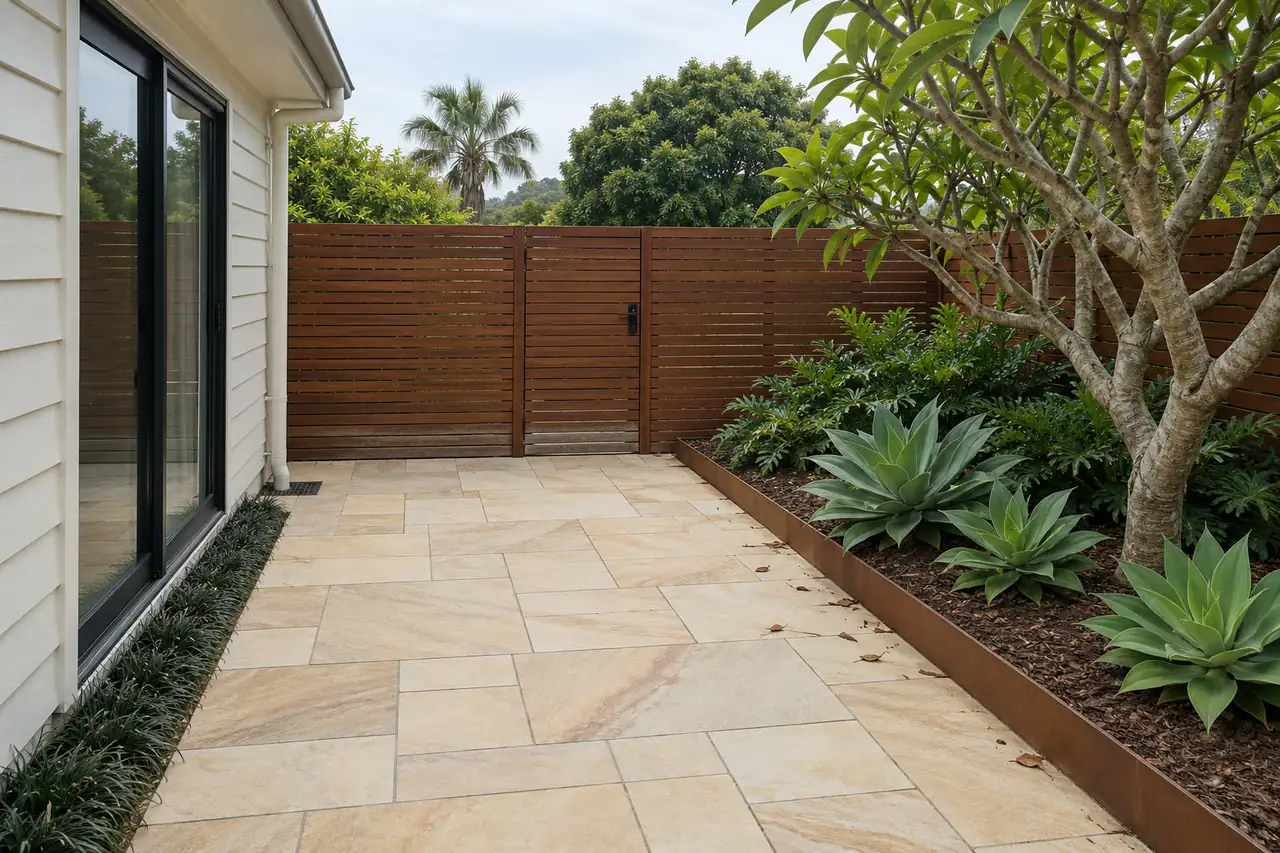
Sandstone pavers set into lawn or groundcover, for gentler slopes and side paths.
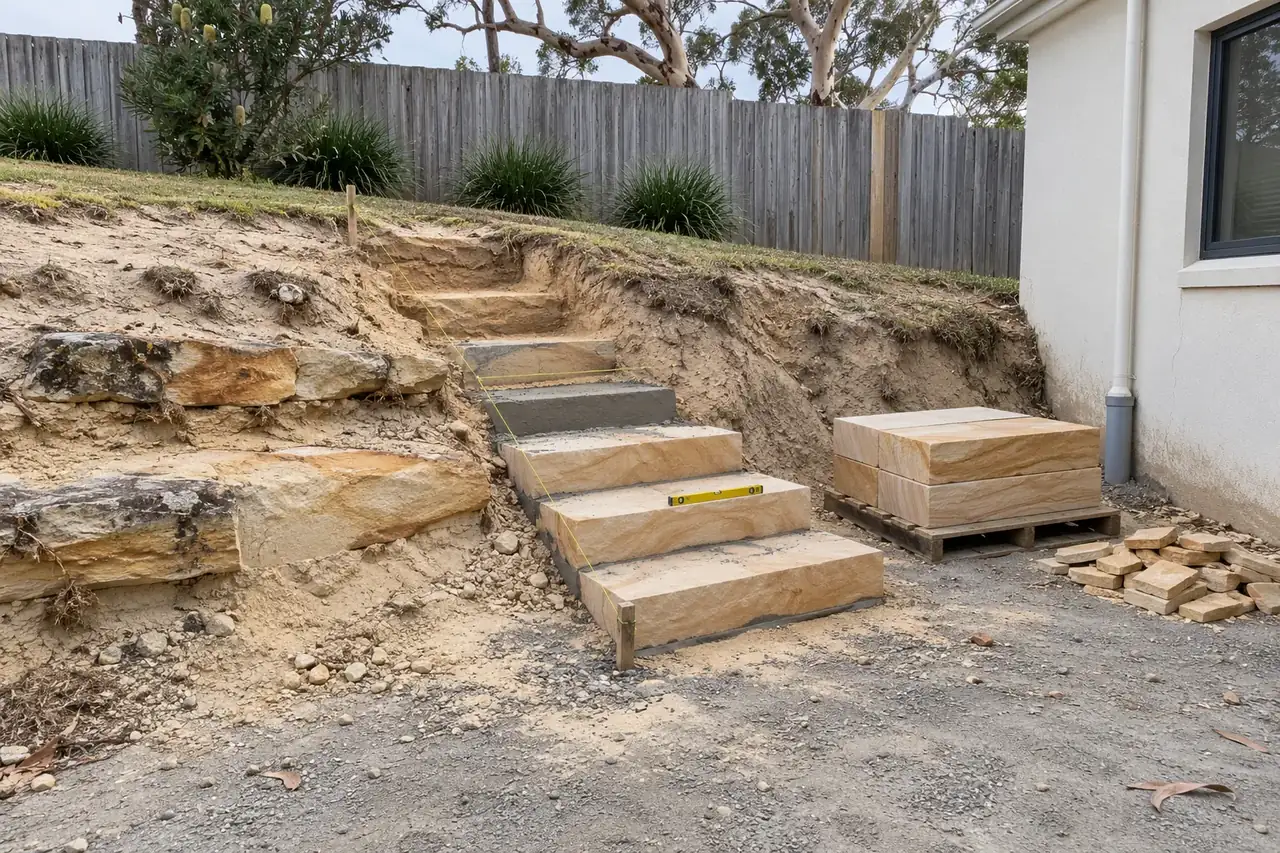
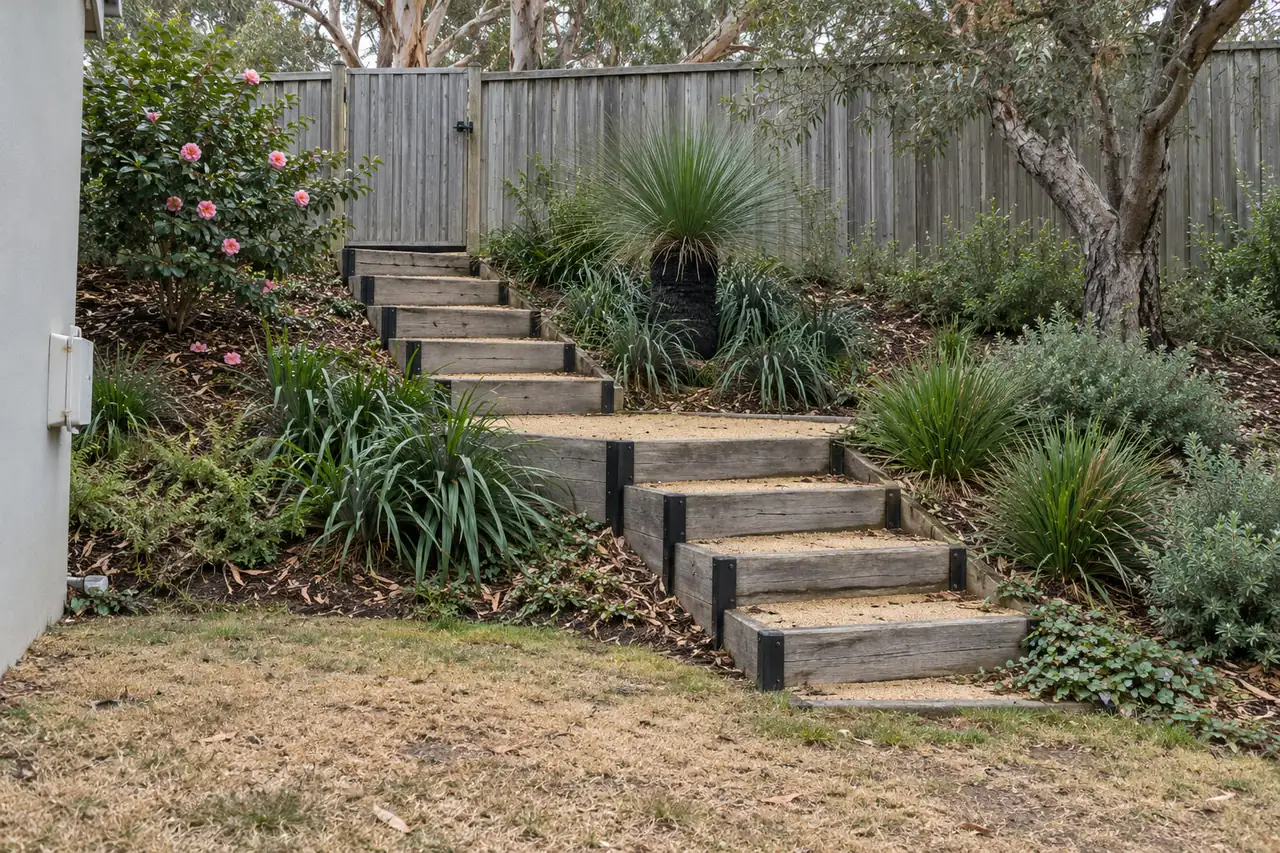
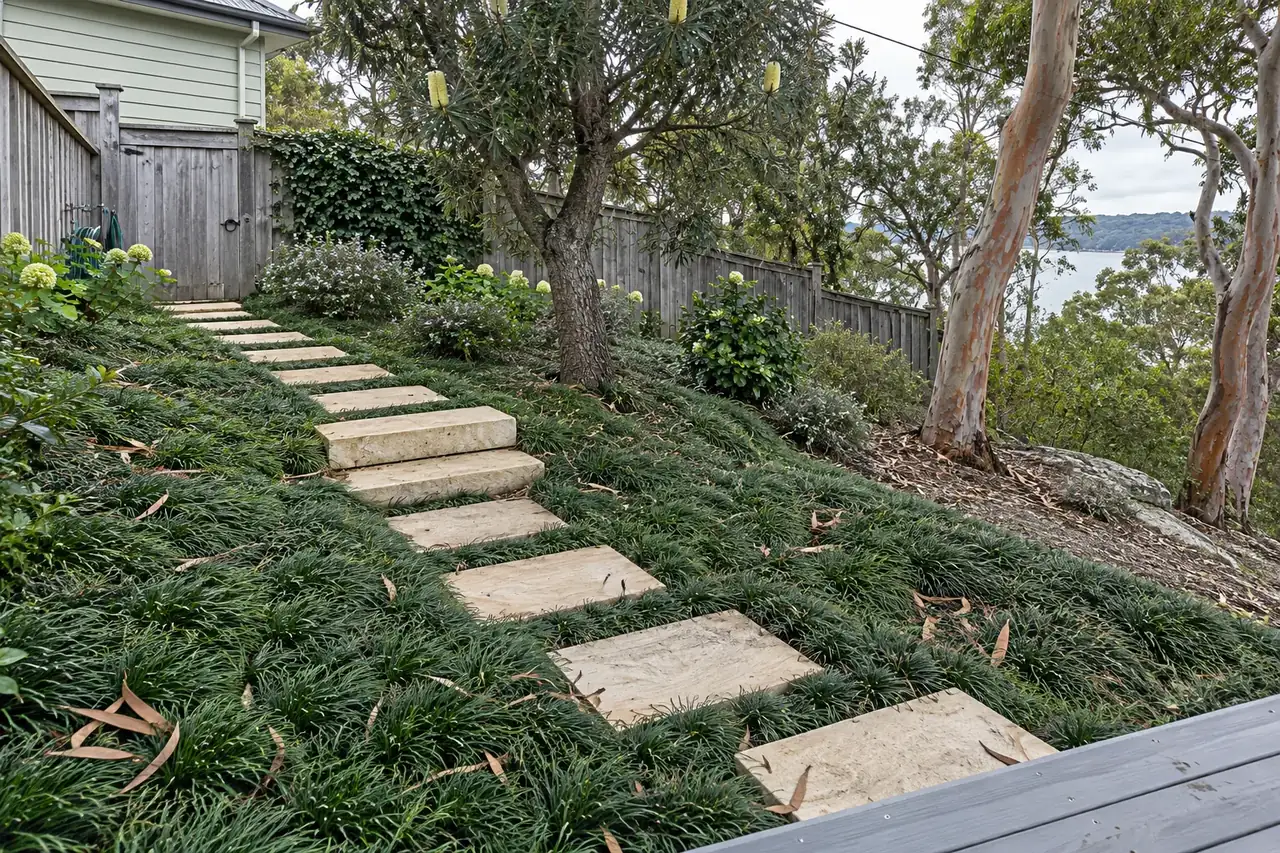
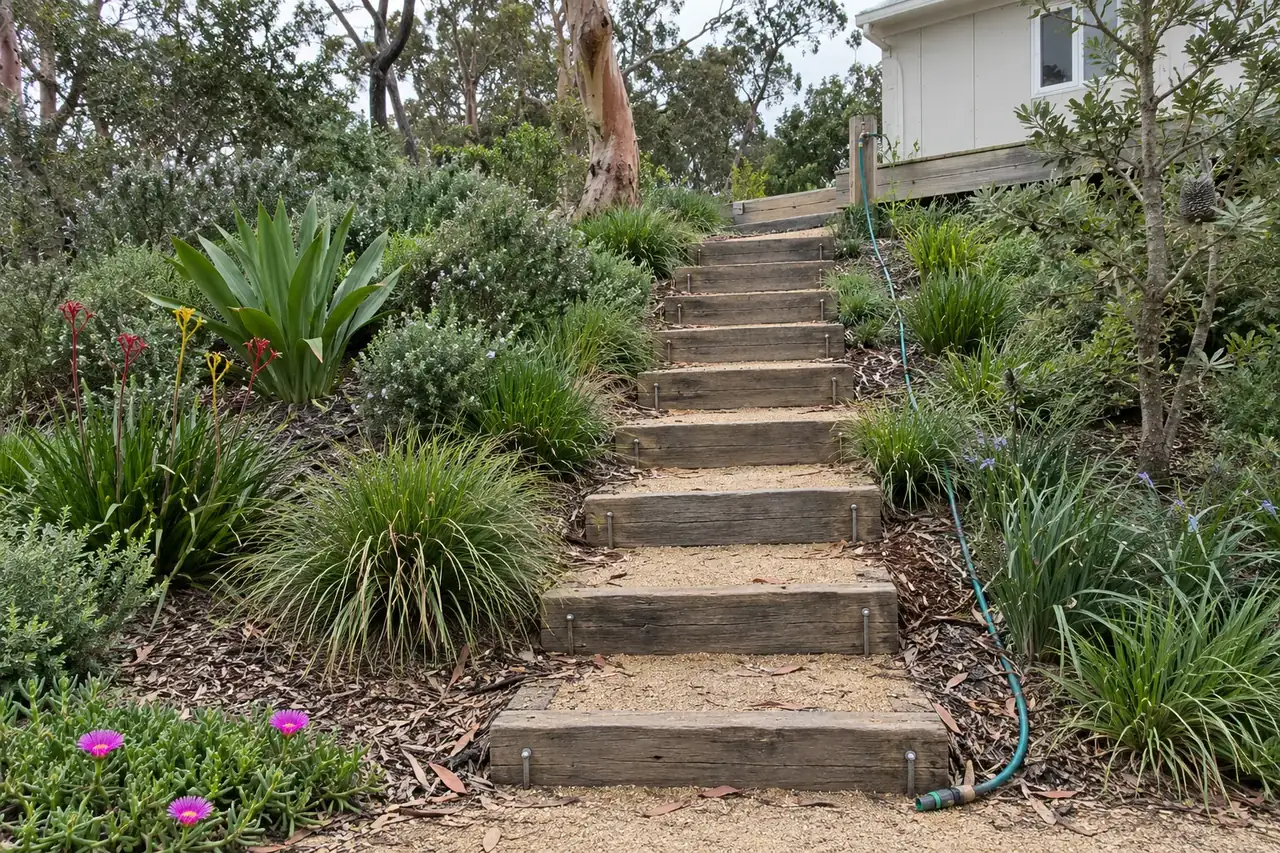
Every step in a flight should be the same height. Uneven risers trip people, especially going down in the dark.
Outdoor steps are easiest at about 150 to 180 mm high with a deep tread. On long runs, landings give you a place to stop.
Steps collect water from above. A drain at the top, or a slight fall on each tread, stops them washing out or staying slippery.
On steps that lead to the house, the building code requires a handrail and, where the drop is 1 m or more, a balustrade. Long or steep garden flights are safer with a rail either way.
Outdoor steps count as wet surfaces. Sawn or textured sandstone and textured porcelain grip underfoot; honed or polished stone does not.
Near the beach, the pins and brackets in sleeper steps should be 316 stainless steel, so they don't rust out of the timber.
The landscaper measures how far the slope rises and how long the run is, checks the ground and access, and talks through stone, sleepers or concrete.
The rise is split into equal step heights and each step is pegged and string-lined, because one odd step is a trip hazard.
After a Before You Dig check, each step is cut into the bank down to firm ground or rock, with a compacted base or a concrete footing under it.
Sandstone blocks, sleepers on posts or concrete steps are set firm and level, with edging or a low wall where the bank needs holding.
The sides are backfilled and compacted, joints are filled, water is led off to a bed or drain, and the site is cleaned up.
Sandstone and concrete sleepers. Both handle salt air and sand. Treated pine costs less but weathers faster, and smooth tiles get slippery when wet.
There is no reliable Sydney price guide for garden steps yet, so we don't give a range here. Stone steps cost more than sleeper or concrete steps. The number of steps, carrying materials down stairs, and any wall or handrail beside the flight change the price. Your price is set at the free site visit.
Yes. Where rock is near the surface, we can cut steps into it or build on it, which gives a very solid base. It takes more labour and the right saws, which adds to the price.
Yes. We build most garden steps by hand, carrying sandstone treads and sleepers in from the street or down the side path.
Usually not. Steps that are part of a retaining wall over 600 mm, or that have a drop beside them of more than a metre, bring in approval or building code rules. We check this at the site visit.
About 900 mm lets one person carry things comfortably; 1.2 m or more lets two people pass. Wider steps also suit a big slope.
Measure the height from the bottom to the top and divide it by a comfortable riser of 150 to 180 mm. A 1.5 m rise needs nine or ten steps. Each tread should take a whole foot. We measure the rise and the run at the site visit.
Usually the timber is replaced. Rotten sleepers and loose pins don't hold a step. The flight is rebuilt in in-ground treated pine (H4 or better), concrete sleepers or sandstone, on new pins. If the gravel fill has washed out, a drain at the top stops it happening again.
Choose a textured surface and keep water off it. Sawn or split sandstone grips better than honed stone. Each tread gets a slight fall so it sheds water. On shady south-facing slopes moss builds up, so cutting back overhanging plants and a yearly clean help.
Steps on the path to the house must meet the building code: a handrail on at least one side, and a balustrade where the drop is 1 m or more. Other garden steps fall outside the code, but long or steep flights are safer with a rail.
Yes. Low-voltage step lights can be set into the risers or the walls beside the steps, with the cable laid as the steps go in. That is easier than adding them later. A licensed electrician fits any new outdoor power point or mains wiring.
Yes. Lower risers of about 150 mm, deep treads, handrails on both sides and a landing every eight to ten steps make a flight easier. A contrasting edge on each tread and step lights help people see where to put their feet.
Send a short description of the job, your suburb and a photo if you have one. We’ll reply to arrange a site visit and a free quote. You can also email quotes@northernbeacheslandscaping.com.au.
Thanks, we have your details
We’ll be in touch to arrange a site visit and a free quote. If it’s urgent, email quotes@northernbeacheslandscaping.com.au.