Retaining walls Northern Beaches
Manly to Palm Beach
Manly to Palm Beach
We build retaining walls across the Northern Beaches, from Manly to Palm Beach, using sandstone blocks, boulders, timber sleepers or concrete sleepers. Walls here usually lean or fail because water builds up behind them. Every wall we build gets gravel backfill, an ag pipe (a slotted drainage pipe) at its base and somewhere legal for the water to go.
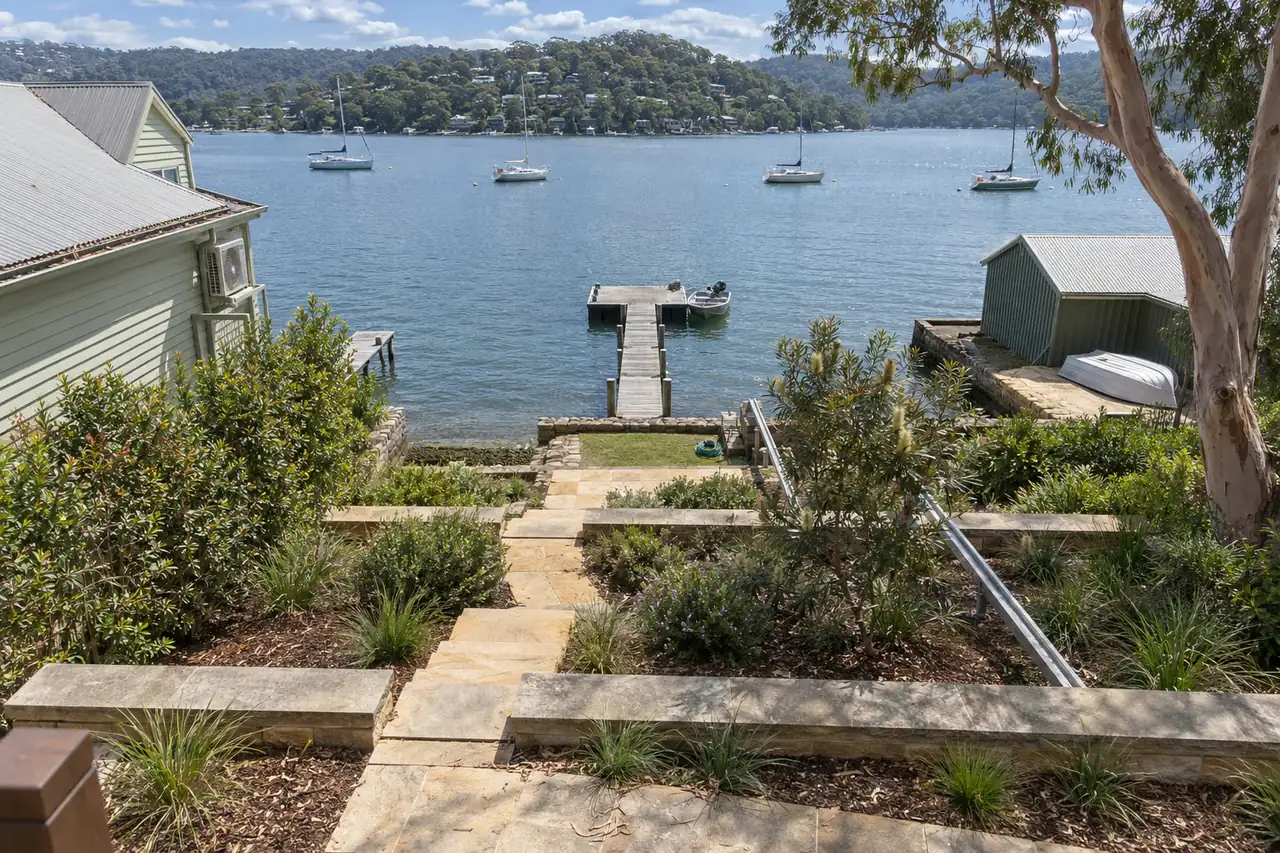
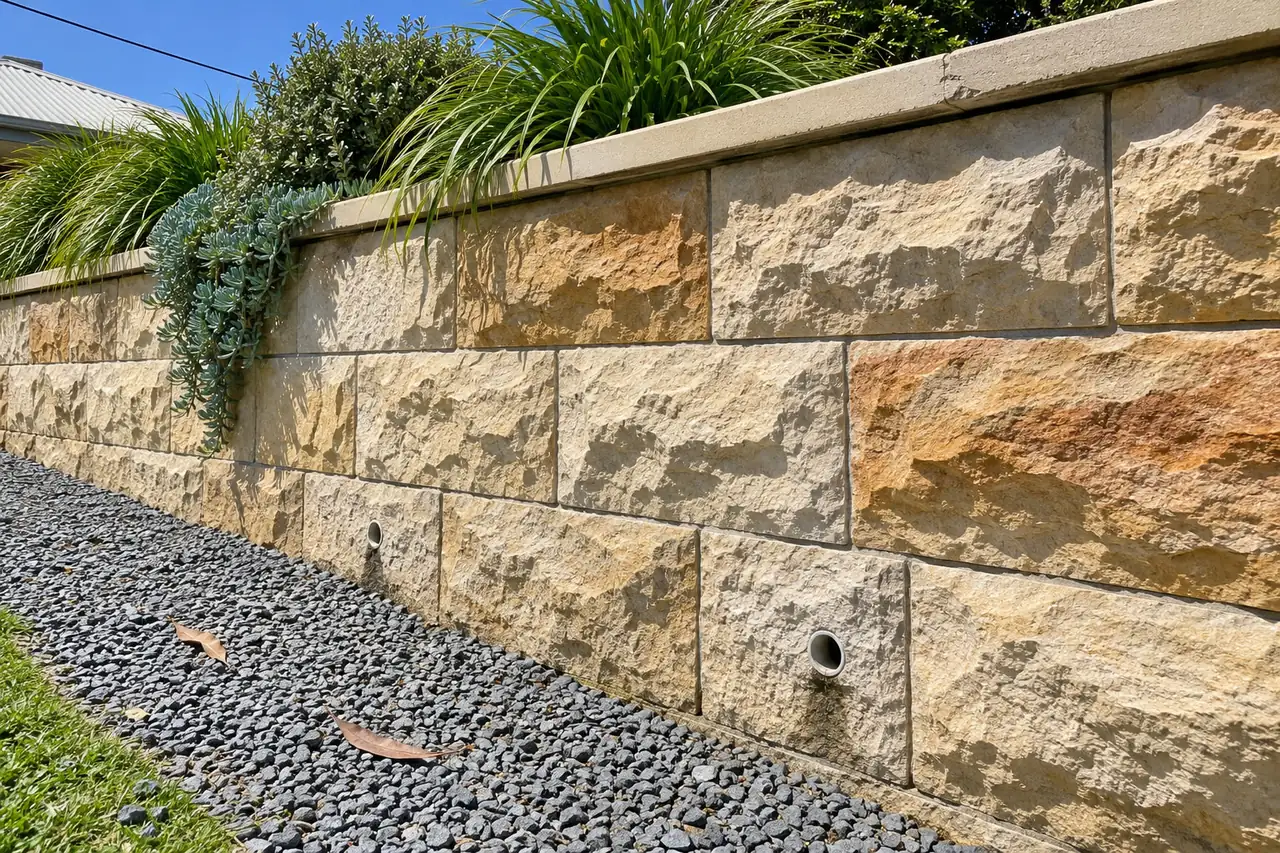
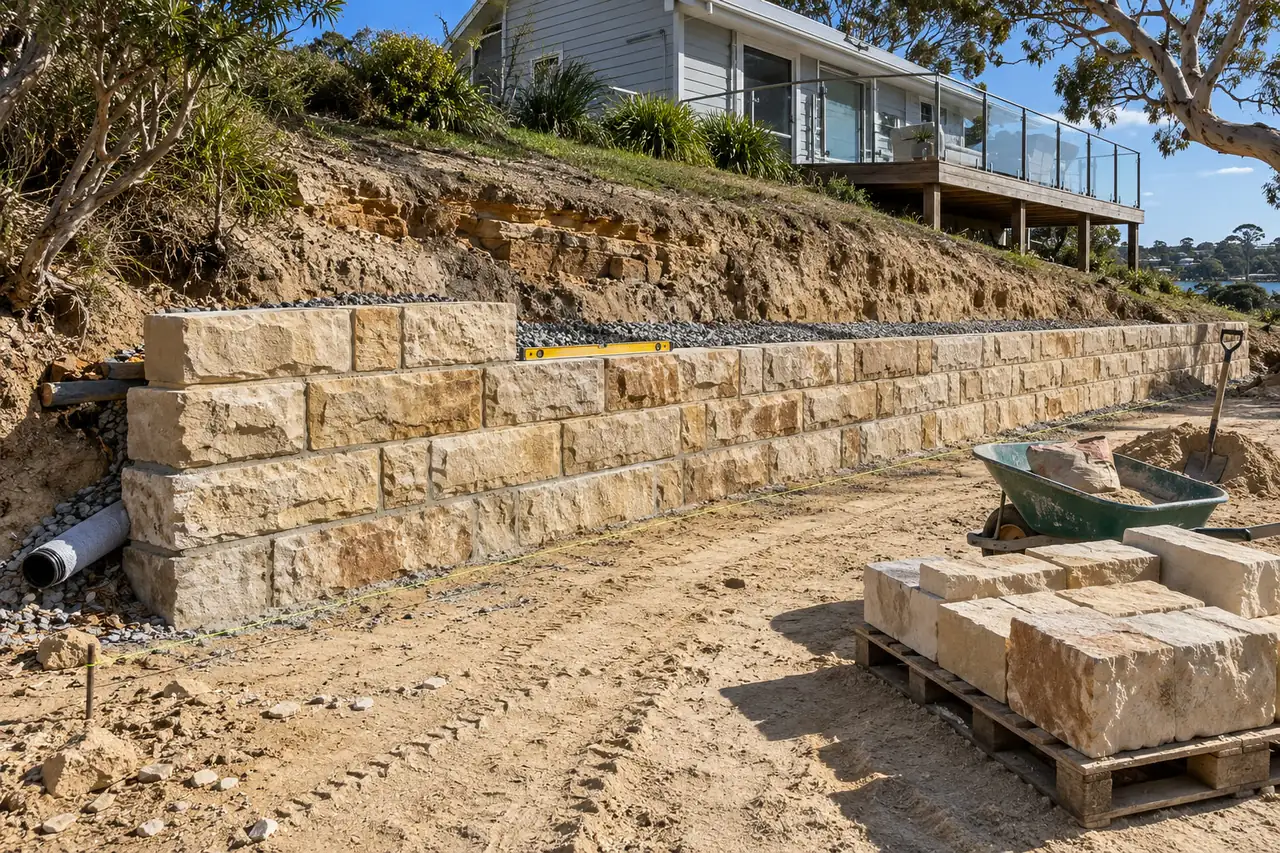
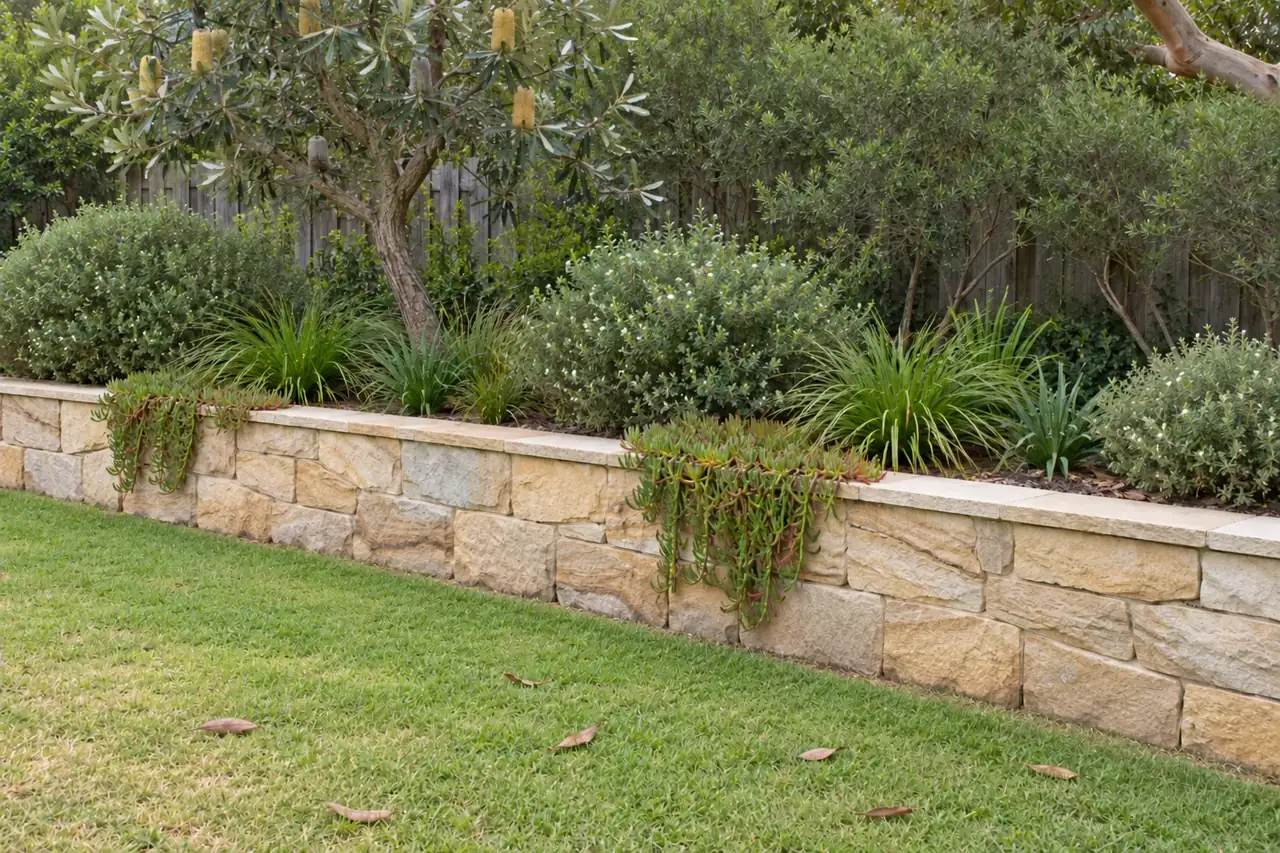
Request a free quoteSplit-face or sawn Sydney sandstone, the rock the area sits on. It weathers to match the stone already on the block and suits harbour and Pittwater slopes.
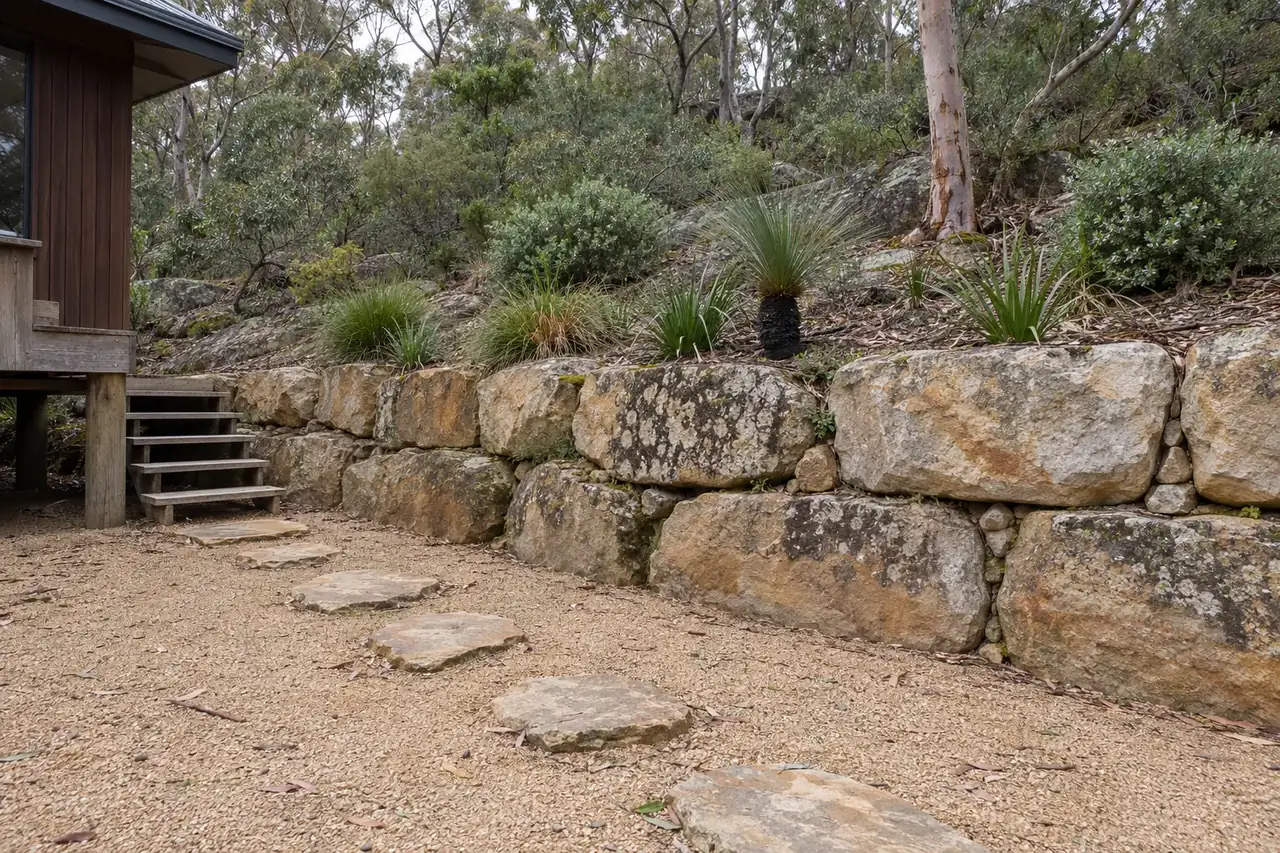
Natural sandstone boulders stacked and keyed into the bank. They handle large changes in ground level on bush blocks and need no mortar.
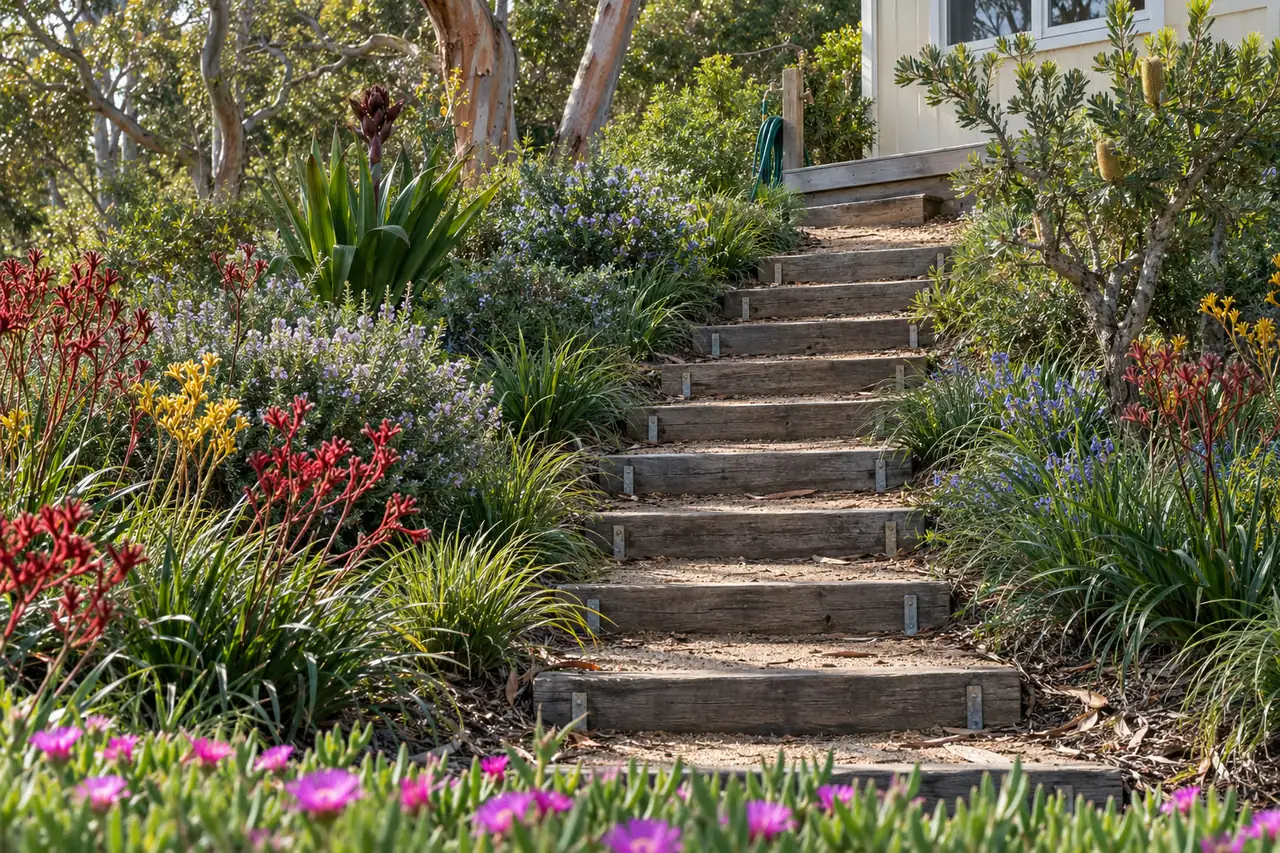
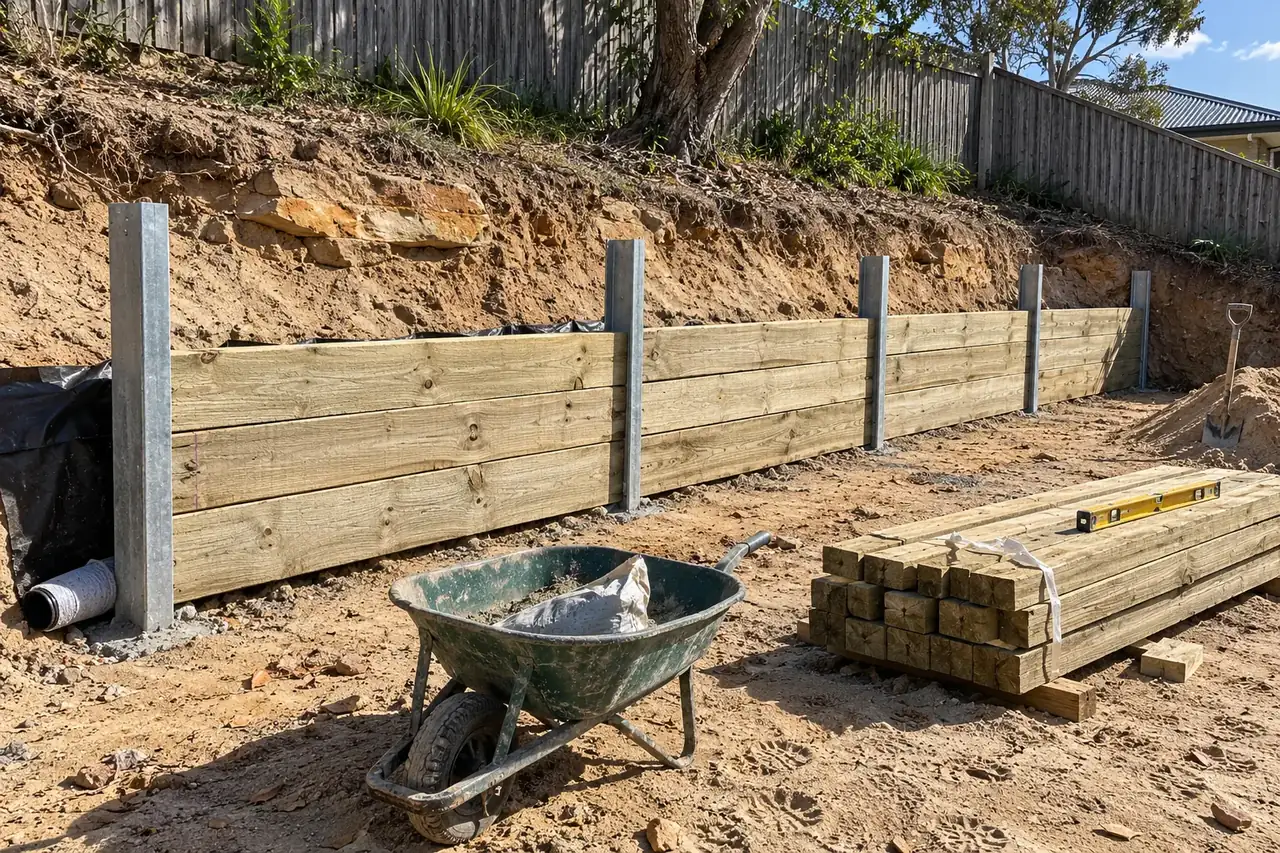
Treated pine or concrete sleepers between galvanised steel posts. They cost the least for a lower bank, and concrete sleepers last longer near the sea.
On the plateau and steep Pittwater streets, footings often meet sandstone within a spade or two, and the wall can sit on the rock. On the sand around Narrabeen and Collaroy, footings go deeper or wider instead.
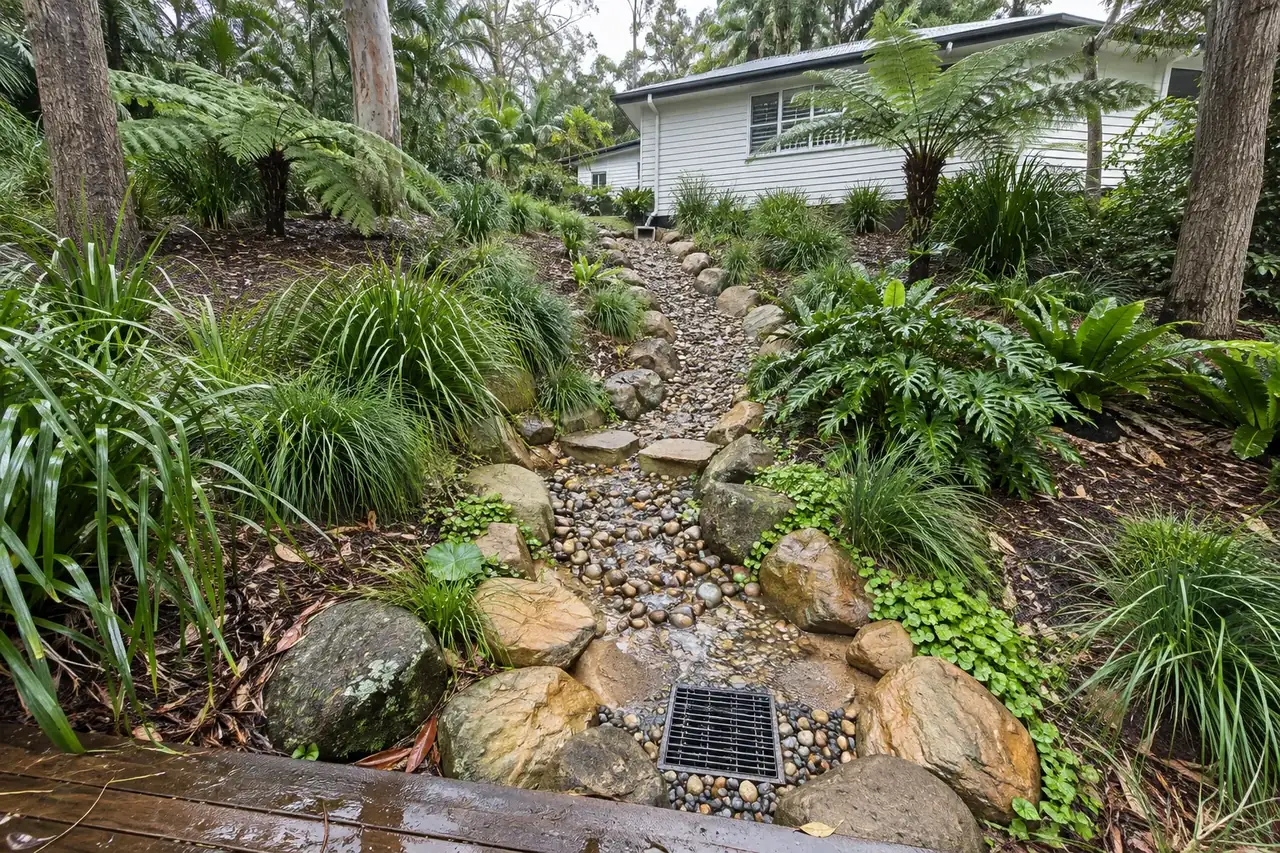
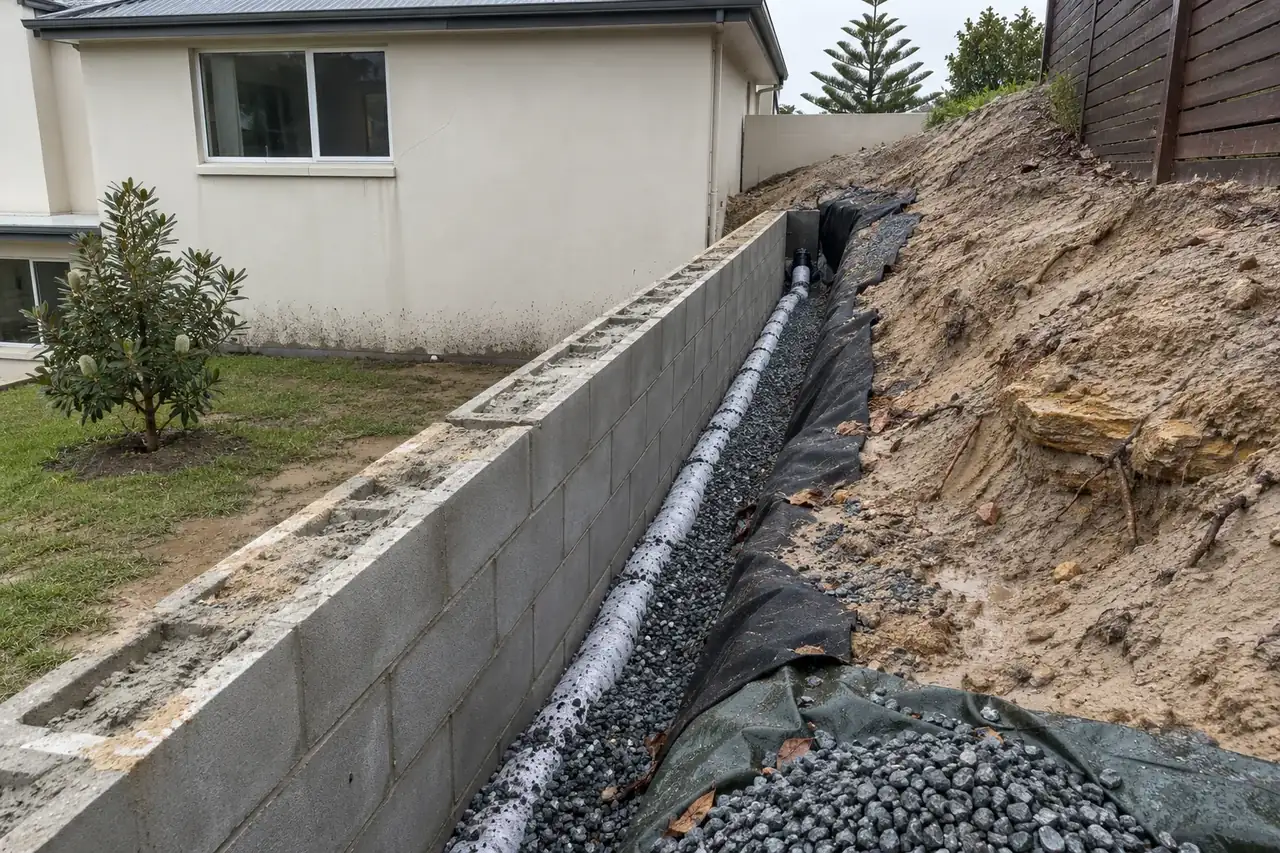
Gravel behind the wall, an ag pipe at its base and weep holes let water out. On a slope, that water then needs a pit and a pipe to the kerb or stormwater line, never onto the neighbour's land.
Where access is limited to stairs or a narrow side path, we build by hand and carry the materials in. This takes longer, and the free quote includes that labour.
Near the beach, sandstone and concrete sleepers hold up better than treated pine. Steel posts should be hot-dip galvanised, painted as well close to the surf, with 316 stainless bolts.
On the lagoon flats around Narrabeen, Dee Why, Curl Curl and Manly, groundwater sits close to the surface. Sleepers there should be H5 treated pine or concrete, not the H4 grade used for low dry walls.
Parts of Pittwater and the old Warringah area are mapped for landslip risk. On mapped land, digging and walls can need a geotechnical engineer's report before approval.
The landscaper measures the slope, height and access, checks the ground, and says whether the wall needs approval or an engineer.
Where the wall needs it, the engineer's design and the council or certifier approval come first, so the footing and drainage are set before any digging.
You agree a clear price and what's included before work starts. Over $5,000, NSW law needs a licensed builder and a written contract, and over $20,000 home building compensation cover.
Underground services are checked through Before You Dig, the line is pegged and string-lined, and post holes or the footing go down to firm ground or rock.
Posts are concreted plumb with a lean back of about 30 mm for every metre of height, or a concrete footing is laid for a block or sandstone wall.
The sleepers or blocks go in course by course, with ag pipe in filter fabric at the base and gravel filled behind the wall as it rises.
A compacted soil cap seals the gravel, the pipe runs to a lawful stormwater point, and the site is cleaned up.
Often not, if the wall is no higher than 600 mm, sits about 1 m from the boundary and doesn't send water onto the neighbour's land. Taller walls, walls on the boundary, stacked walls less than 2 m apart and walls near the lagoon or Pittwater usually need approval. We check this at the site visit.
Sydney cost guides put a wall about 1 m high at roughly $350 to $900 a metre in concrete sleepers or block, with timber sleepers from about $230 a metre (What's The Damage? and Yakka Labour, October 2026). Sandstone and engineered walls cost more. Height, rock or sand underfoot, stairs-only access and drainage change the price. Your price is set at the free site visit.
Usually water. Without drainage behind the wall, wet soil pushes against it after heavy rain. Other common causes are rotting sleepers, tree roots and walls built too thin for their height. A leaning wall is usually rebuilt with drainage rather than propped up.
Yes. Most walls on stairs-only blocks are built by hand. Where a small tracked machine fits down the side of the house, we use one for the digging.
Sandstone and concrete sleeper walls with good drainage last for decades. Treated pine has a shorter lifespan, especially in wet ground. Drainage matters as much as the material.
Sometimes repaired, more often replaced. A short run that has moved a little, with sound blocks or sleepers, can be dug out behind, drained and reset. A wall that is cracked through, bulging or rotten at the posts usually comes down and is rebuilt with drainage.
There is no simple rule. The NSW Dividing Fences Act doesn't count a retaining wall as a fence unless it holds up the dividing fence. Responsibility often follows who changed the ground level. Agree it with your neighbour in writing before work starts; Legal Aid NSW explains the options.
Yes. Roots of a large tree close to a wall can lift its footing, crack blocks and push sleepers out of line. A new wall is set back from the trunk or bridged over the big roots, rather than cutting roots the tree depends on.
Usually water moving through it. Salts dissolved from the soil, mortar or concrete dry on the face as a white crust, called efflorescence. It brushes off when dry, but it shows water is passing through the wall, so check the drainage behind it.
Often, yes. Sound blocks are lifted, cleaned and relaid on a new footing with gravel and an ag pipe behind. Cracked, soft or flaking blocks are swapped for new sandstone chosen to sit close in colour, and the old stone can go into steps or edging.
Often, for walls over about 1 m, walls holding up a driveway, a building or the neighbour's land, and walls on slopes the council maps for landslip risk. The engineer sets the footing, drainage and any steel. We tell you at the site visit whether yours needs one.
Send a short description of the job, your suburb and a photo if you have one. We’ll reply to arrange a site visit and a free quote. You can also email quotes@northernbeacheslandscaping.com.au.
Thanks, we have your details
We’ll be in touch to arrange a site visit and a free quote. If it’s urgent, email quotes@northernbeacheslandscaping.com.au.