Garden design Northern Beaches
Manly to Palm Beach
Manly to Palm Beach
A garden or landscape design sets out the levels, walls, paths, paving, lawn and planting on one plan before work starts. On the Northern Beaches, we work with the slope, sandstone, sandy soil and salt wind, and choose plants that grow well here. The plan lets you build in stages and compare quotes for the same work.
Request a free quoteThe whole garden on one page: levels, walls, paths, lawn, beds and where the water goes.
Plants chosen for the aspect, soil and salt exposure, with sizes and spacing.
Walls and drainage first, then paving and turf, then planting, as the budget allows.
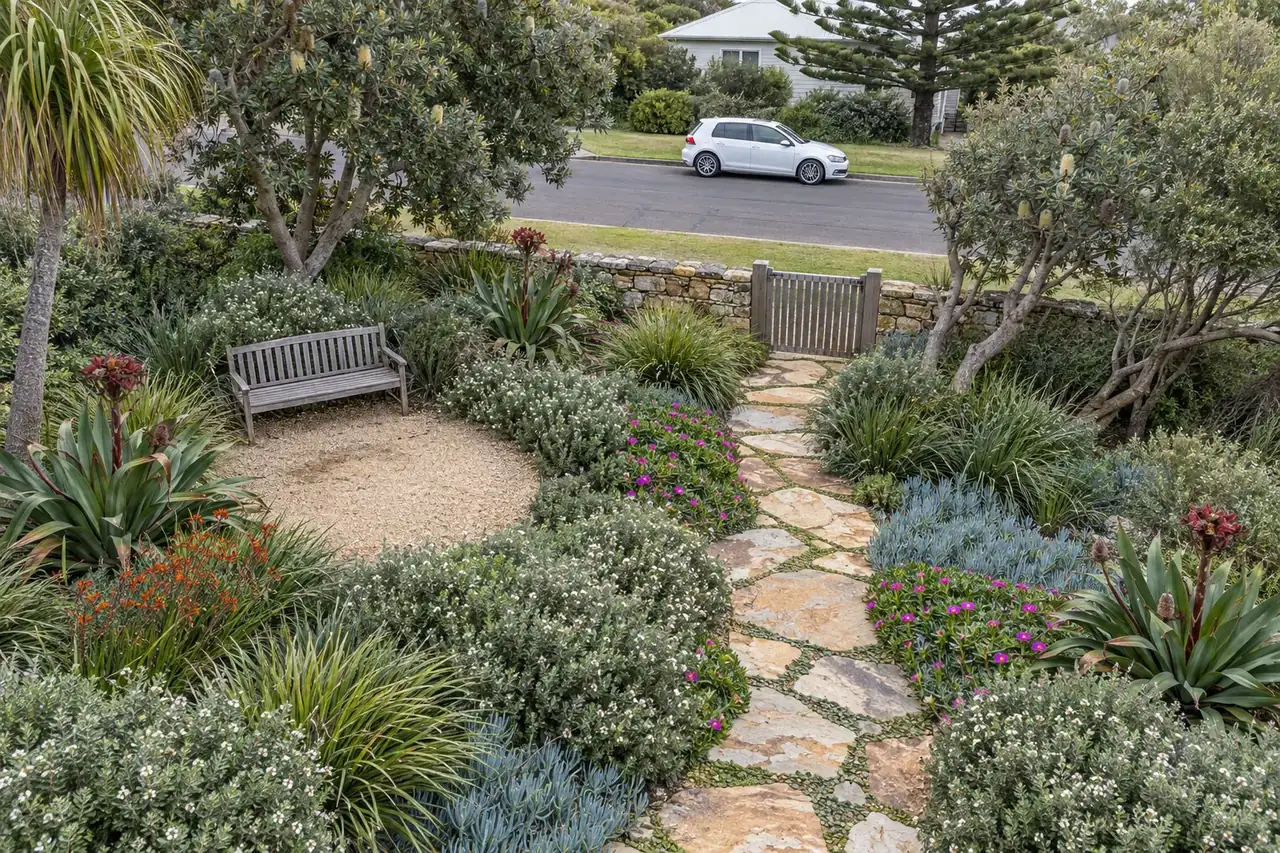
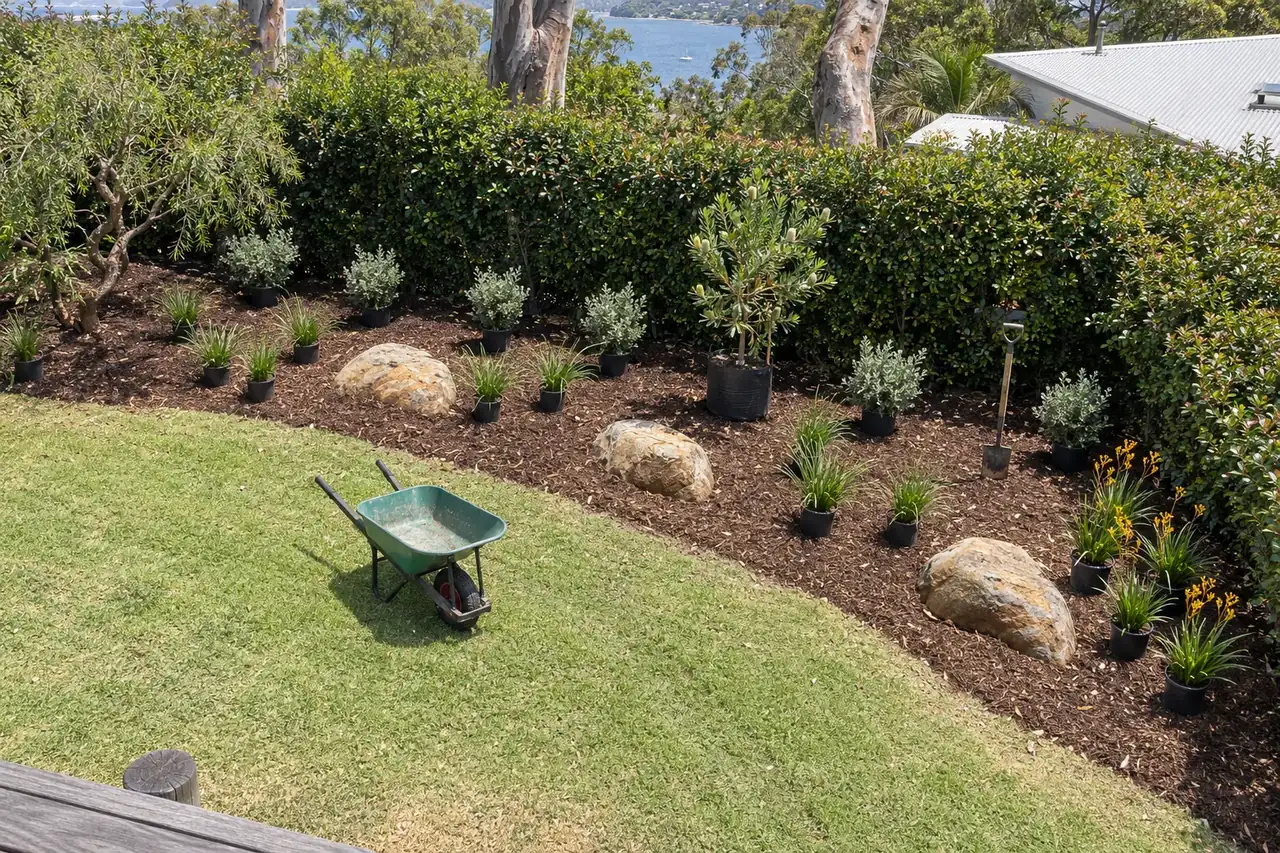
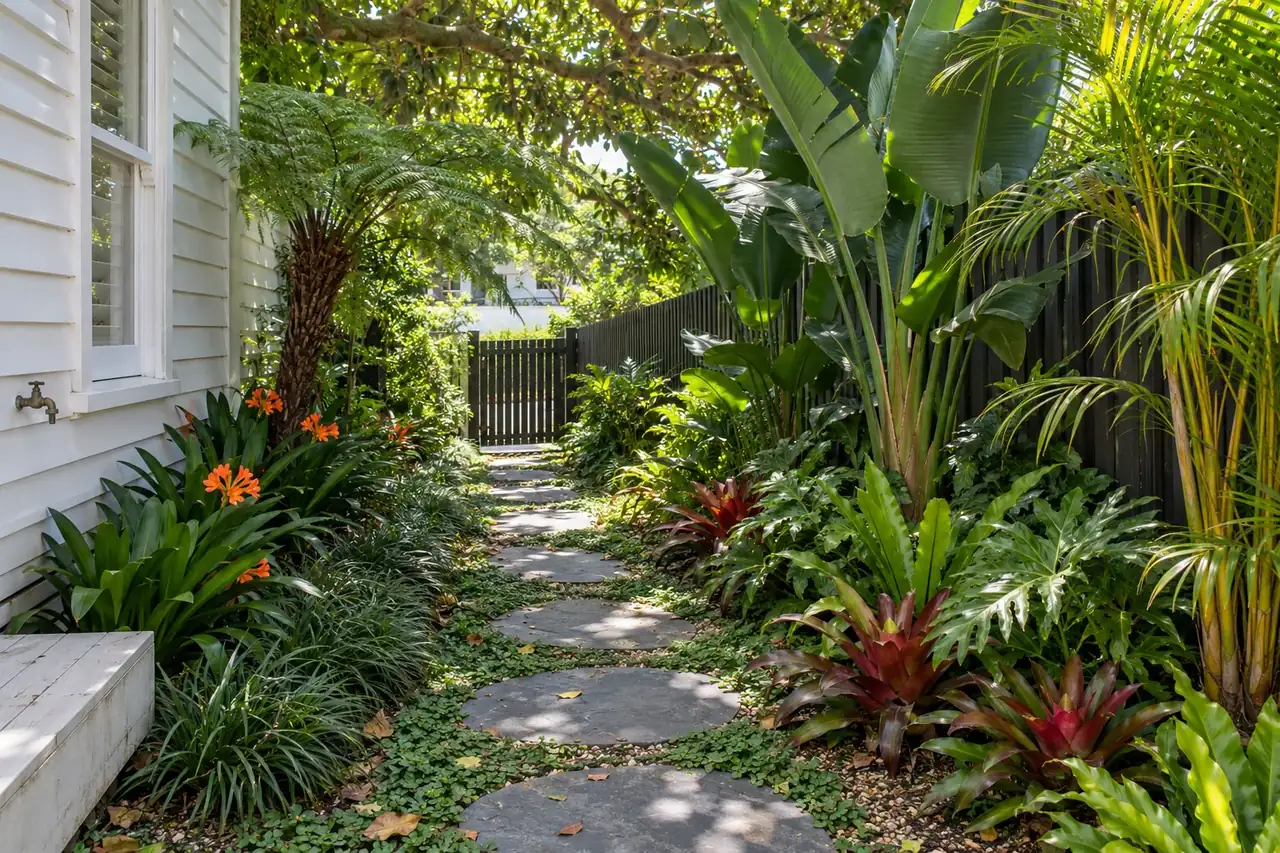
North-facing yards get sun all year; south-facing ones sit in shade through winter. That decides the lawn and the plants.
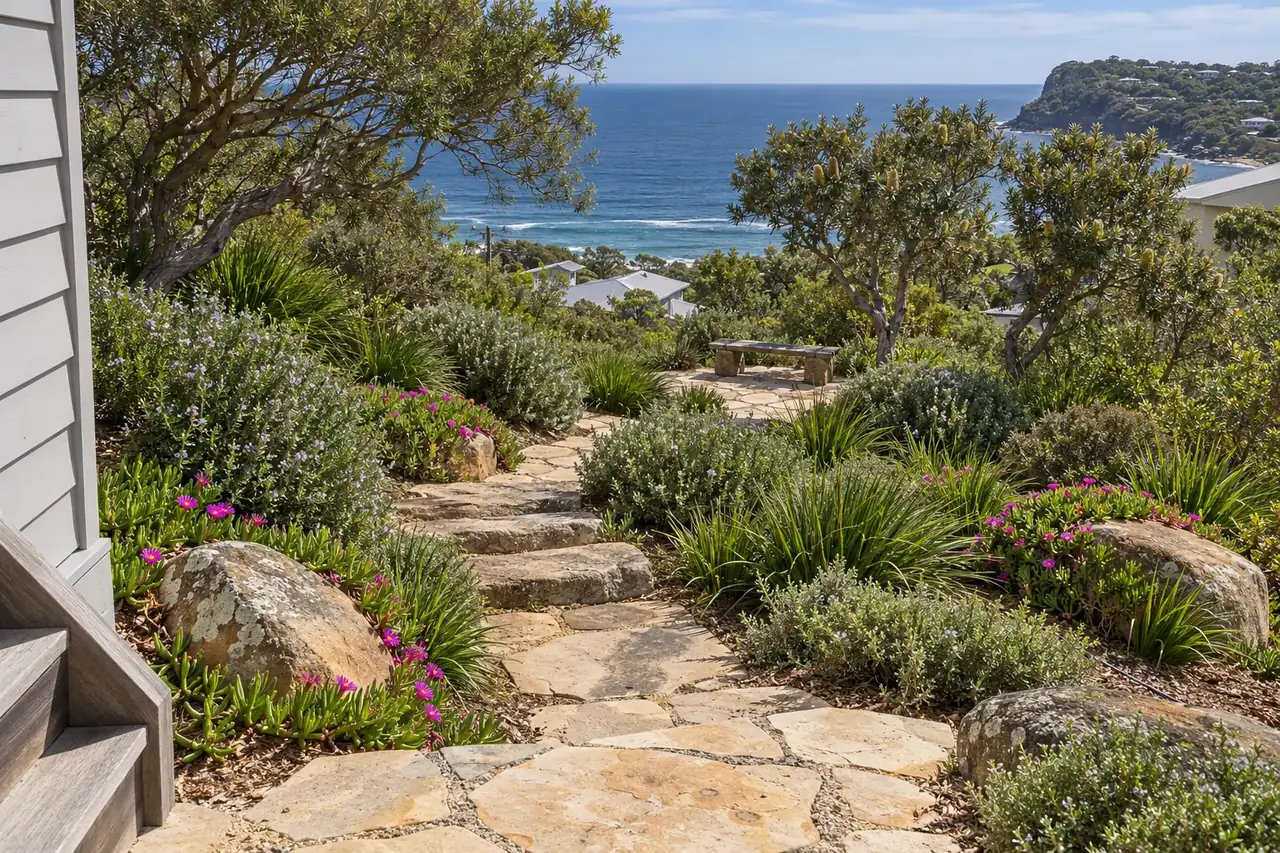
Gardens exposed to salt wind need tough coastal plants such as banksia, westringia and lomandra to shelter softer plants behind them.
On bushfire-prone land, what is planted near the house, and how close, matters. The NSW Rural Fire Service publishes guidance.
Most trees on private land need a council permit to remove or heavily prune, except trees under 5 m tall, listed exempt species and trees within 2 m of an approved building.
Inside mapped 10/50 areas, trees within 10 m of a house can be cleared without approval, but not on slopes over 18 degrees, which rules out many steep Pittwater blocks. Check the RFS tool on the day.
On the lower Pittwater slopes the canopy is spotted gum and grey ironbark; on the ridgetops around Terrey Hills and Duffys Forest it is ironstone-soil bush. Designs keep these local trees.
At a site meeting you talk through how you use the garden, your budget, and the problems to solve: slope, drainage, privacy, upkeep.
The designer records levels, soil, sun and shade, existing trees, access and any council limits.
A scaled layout shows the areas, key plants and materials, so the direction is agreed before details are drawn.
Levels, drainage, construction details and a planting schedule are drawn, plus drawings for council or an engineer if the job needs them.
The plan becomes the brief for the build price, agreed before any work starts.
Not for a simple job. For a whole garden or a steep block, a plan saves money by giving every builder the same work to quote, and lets you build in stages.
Sydney and NSW guides put a garden or landscape design plan at about $900 to $5,750, most often $1,500 to $4,000, and a first consultation at $150 to $400 (What's The Damage?, October 2026; The Quote Yard, January 2026). The size of the block, levels and drainage, and how detailed the drawings are change the price. Your price is set at the free site visit.
Yes. We build the structure first (walls, drainage, steps), then paving and lawn, then planting. The plan makes sure each stage fits the next.
Usually, yes. Northern Beaches Council requires a permit for most trees on private land. The exceptions are trees under 5 m tall, listed exempt species and trees within 2 m of an approved building (decks and pergolas don't count). Check with council before any tree work.
A landscape architect has a university degree and can register with the Australian Institute of Landscape Architects; many work on larger and public projects. A landscape designer usually focuses on home gardens. For most house gardens, a designer's plan is enough.
Start with the levels and the water, then the look. Decide where you need flat ground and how you'll move between levels, find where water runs in storms, and keep good rock outcrops. Plant the steepest parts rather than walling them all.
Yes. Fewer lawn edges, mulched beds, plants matched to their spot, drip watering on a timer and no clipped hedges all cut the work. Near the surf, tough coastal natives need far less trimming and replacing than soft exotics that burn in the salt.
Keep trees from touching or overhanging the house, prune lower branches up to about 2 m, keep shrubs out from under trees and leave gaps between plant clumps. Gravel or paving right next to the walls, instead of bark mulch, keeps embers away from fuel.
Yes, and it usually should. Mature trees give shade and privacy straight away, and sandstone outcrops anchor a design. Digging, paving and machines stay out of each tree's protection zone, roughly 12 times its trunk width, and the levels are built around the rock.
Send a short description of the job, your suburb and a photo if you have one. We’ll reply to arrange a site visit and a free quote. You can also email quotes@northernbeacheslandscaping.com.au.
Thanks, we have your details
We’ll be in touch to arrange a site visit and a free quote. If it’s urgent, email quotes@northernbeacheslandscaping.com.au.